






On the coffee table at her home in Atlanta, Sarah Boim has a pile of documents from her old job at the Centers for Disease Control and Prevention. They are printouts of her employment records.
Boim lost her job in the first big wave of CDC firings — more than 1,000 people were suddenly let go last February.
“This is the termination letter. I also printed off my performance review from 2024,” she said. “I knew I wouldn’t have access to it, and everything was so chaotic that I needed proof of what was happening.”
Boim worked in the National Center for Environmental Health/Agency for Toxic Substances and Disease Registry, handling communications about radon, substances known as forever chemicals, lead poisoning, and other health threats.
Rereading her termination letter, she still can’t believe what it says.
“The agency finds you are not fit for continued employment because your ability, knowledge, and skills do not fit the agency’s current needs, and your performance has not been adequate to justify further employment at the agency,” the emailed letter reads.
“And that floored me,” Boim said, “because my performance was rated outstanding, and I even got a raise. It was just deeply insulting. So I was more upset than I think I was prepared to be.”
The Trump administration later brought back some of the workers who were fired in the first round, but it has also cut more staff and funding.
The CDC has been without a permanent director for more than six months. Recently the Trump administration made Jay Bhattacharya the CDC’s interim director, while he also runs the National Institutes of Health.
The leadership uncertainty comes amid a year of disruption and dismissals at the Atlanta-based institution, from which more than 3,000 public health workers are now gone. That includes staffers the Trump administration terminated and workers who accepted early retirement.
Ripple effects of the turmoil are still hitting the Atlanta region.
By the end of 2025, the CDC had lost roughly a quarter of its workforce.

Boim now works as a contractor in the health field, while also working a non-health-related freelance job. But she mourns the cuts at the CDC, and how the loss of expertise and resources will trickle down to communities. A significant portion of CDC funding goes directly to states and local public health departments.
“It will cause generational harm, which always makes me tear up,” Boim said. “The harm that’s going to come to people that don’t even know what CDC was protecting them from.”
“But for Atlanta, there’s a lot of us; there are thousands of CDC employees that live here,” she added. “We are your friends, your neighbors, your family, and — with the lost income — it has an impact on local businesses also.”
At the SriThai restaurant across the street from the main CDC campus, more than a third of the customers are CDC employees, said manager Nathan Chanthavong.
The restaurant saw a “small dip” in business in 2025 after the mass firings, and also during the government shutdown, he said.


“Typically, we would get a catering order for the CDC. We saw it less, less, and less. It’s not a really big impact, but catering is a big order; it is a lot of money,” he said. “So it does affect us.”
The CDC falls under the purview of the Department of Health and Human Services.
“HHS under the Biden administration became a bloated bureaucracy, growing its budget by 38% and its workforce by 17%,” HHS spokesperson Andrew Nixon said of the cuts and attrition. “The Department continues to close wasteful and duplicative entities, including those that are at odds with the Trump administration’s Make America Healthy Again agenda.”
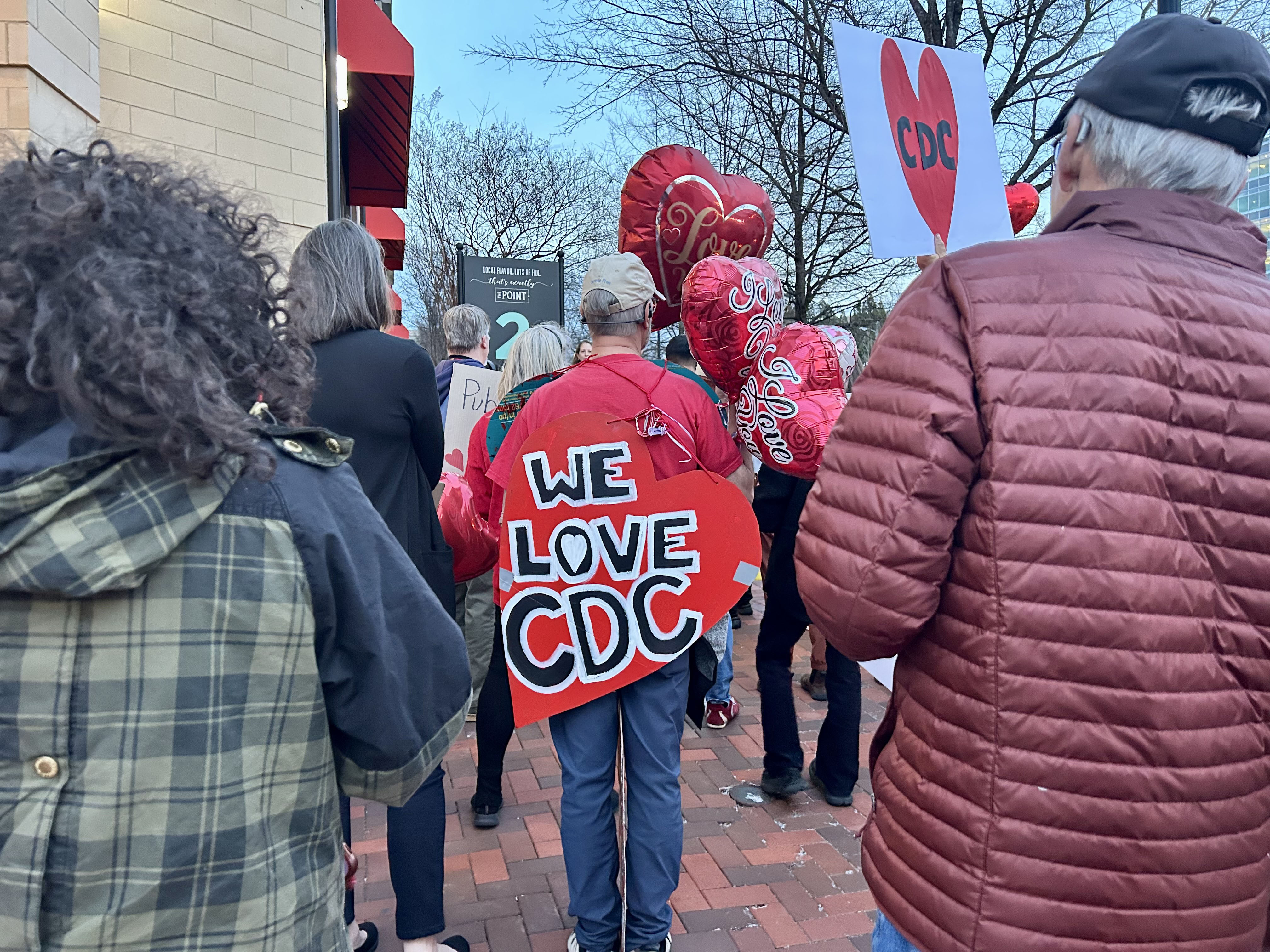
Since the mass firings began, former CDC workers and their supporters have protested outside the agency’s main entrance every Tuesday during the afternoon rush hour.
On a recent Tuesday, a bigger crowd than usual — about 75 people — lined up along the sidewalk. It had been a year since the first massive cuts, which occurred in mid-February 2025. CDC workers dubbed it the “Valentine’s Day massacre.”
Protesters waved handmade signs with slogans such as “We love CDC workers” and “Save Public Health.” Passing drivers honked in solidarity.
Among the protesters was Ben McKenzie, who is still employed as a CDC researcher.
“It’s been heartbreaking to see so many talented, able colleagues be forced out or leave,” he said.

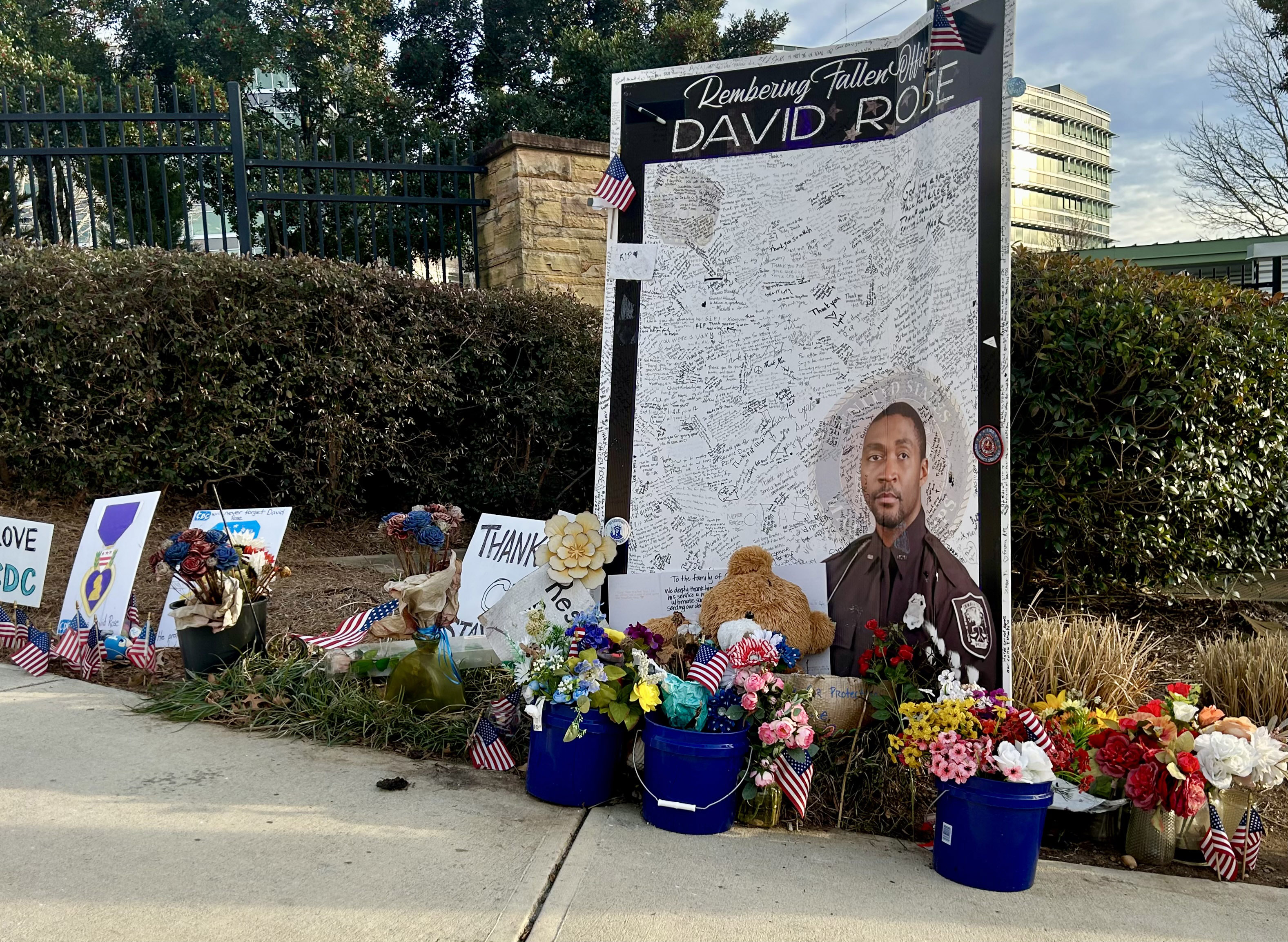
Current employees also need support, he said, especially after a man opened fire on CDC buildings last summer. The gunman killed DeKalb County police officer David Rose before killing himself.
“I think we’ve all felt the emotional impact of being targets,” McKenzie said. “Right now, to work at CDC is in a lot of ways to be a target.”
Multiple CDC employees told KFF Health News and NPR the federal government has yet to fully fix the damage to the windows and buildings hit in last year’s shooting.


McKenzie helps run a mutual aid group, one of several that have sprung up in Atlanta. He said the group has distributed more than $200,000 to help former CDC workers with rent and other needs.
This article is from a partnership with WABE and NPR.


