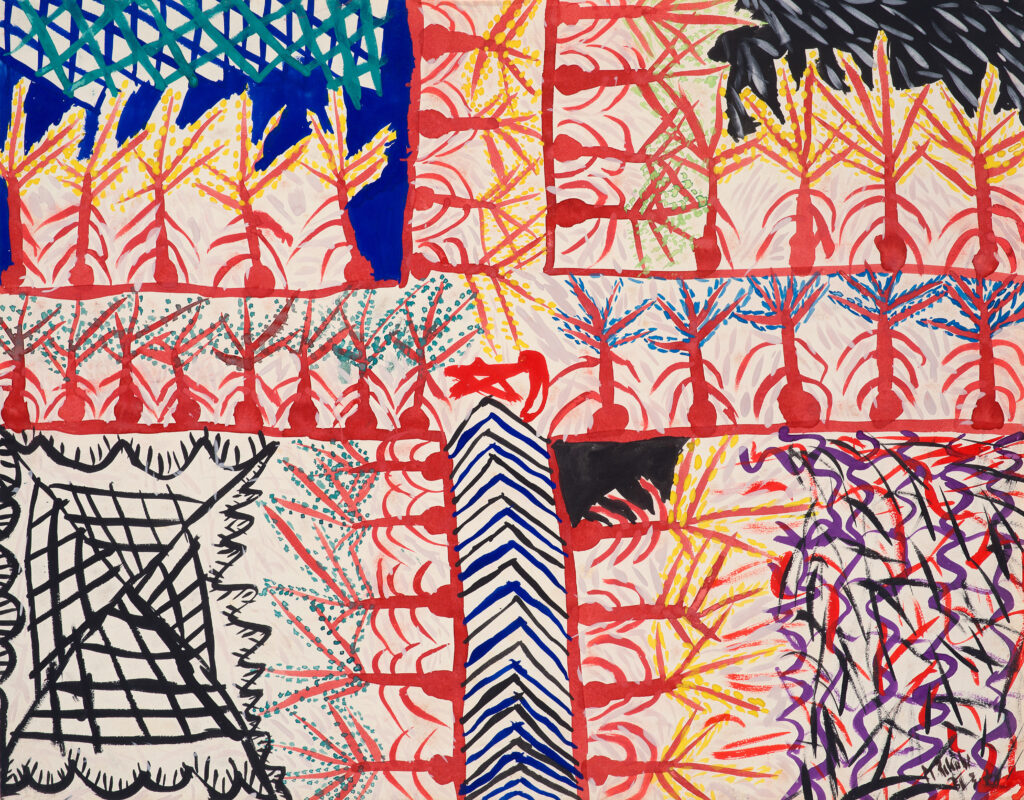
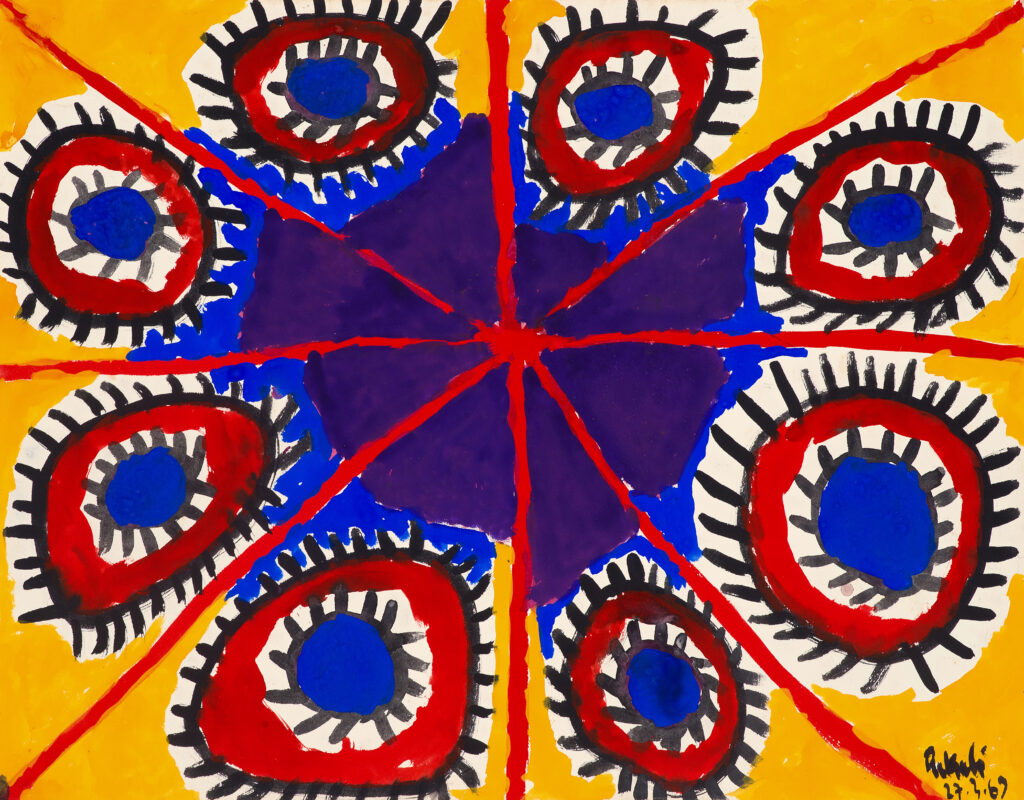
The Arab World Institute museum presents the exhibition until June 28, 2026. “Trying art to heal – At the Blida-Joinville psychiatric hospital during the 1960s”. A unique set of drawings and ceramics produced at the end of the 1960s by residents of the Blida-Joinville psychiatric hospital, in Algeria. Through this exhibition, the museum reveals an exceptional artistic and human experience, born in the heart of a historical and social context marked by decolonization.
These sensitive and powerful works, from social therapy workshops, demonstrate the essential place given to art in the process of care and reintegration. They also reveal a little-known part of the history of modern psychiatry, carried by the legacy of Frantz Fanon and by a humanist approach to the self.
Blida-Joinville, an emblematic place
Founded in 1933, the Blida-Joinville psychiatric hospital is marked by the presence of Frantz Fanon, chief physician from 1953 to 1956. A major figure of anticolonialism and thinker of decolonization, Fanon revolutionized the psychiatric approach by breaking with colonial methods to favor care anchored in the social and cultural context of patients. With the medical team, he develops collective activities (manual, sporting and artistic) promoting individual expression and reintegration.

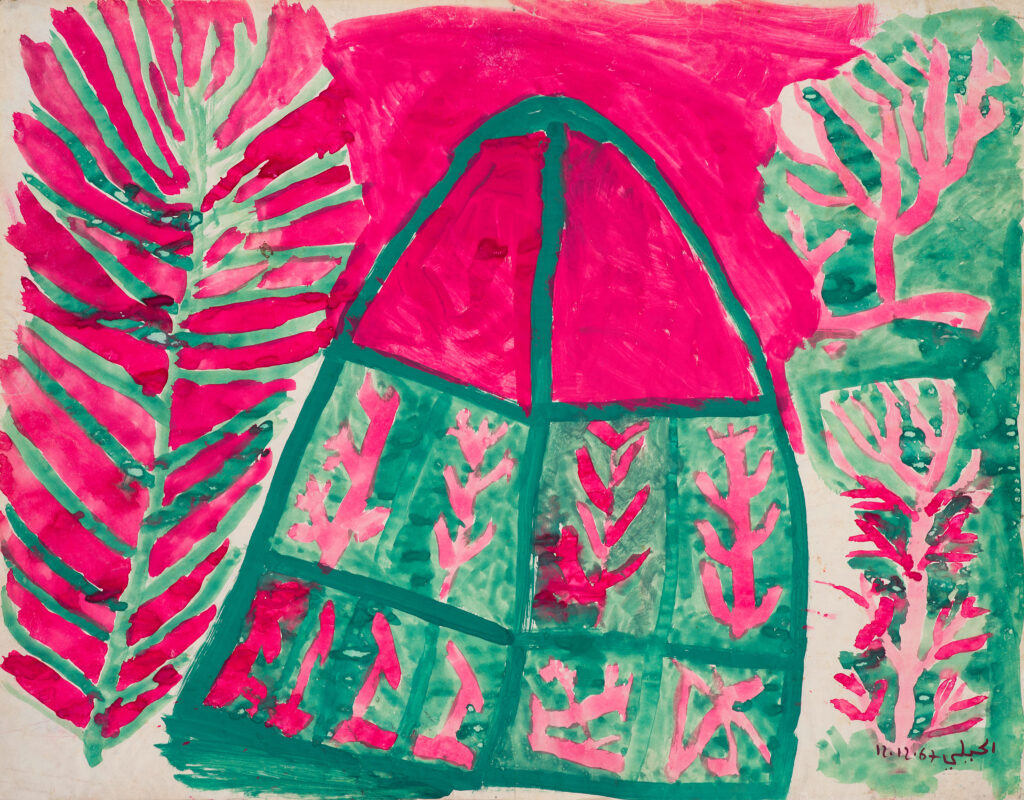
Art as a therapeutic tool
At the end of the 1960s, Fanon’s successors continued this humanist approach and developed drawing workshops. The gouache paintings resulting from these sessions bear witness to the expressive strength of the patients and the profoundly human dimension of their view of the world. The exhibition explores the scope of these works and places them in the historical context of post-independence psychiatric practices.
An exhibition that questions and transmits
In 2022, the Arab World Institute museum receives a donation consisting of archives, painted ceramics and numerous plates drawn in gouache, from social therapy workshops carried out at the Blida-Joinville hospital. This collection constitutes a rare testimony to a pioneering experience, at the crossroads of psychiatry, social history and artistic creation. By questioning both the artistic content of the works and their context of creation, the exhibition highlights the power of art as a vector of care and emancipation. It invites us to rediscover a little-known story where creation becomes a means of reinventing the relationship with care and society.