






What happens within hours of eating a high-fat meal?
We are only as old as our arteries. What can we do to preserve arterial function as we age? A poor diet and sedentary behavior can lead to adverse aging processes, like impairment of the little power plants in our cells, which can result in free radical formation, oxidative stress, and inflammation, which lead to the artery dysfunction that can end in cardiovascular disease that ends us.
In a series of videos I did about a decade ago, I discussed landmark research showing that a single high-fat meal could cripple artery function within hours of consumption, compared to no change with a low-fat meal, as you can see below and at 1:04 in my video Saturated Fat Causes Artery and Lung Inflammation.
In the study, the high-fat meal that so crippled artery function included Sausage and Egg McMuffins from McDonald’s. How do we know the sausage, egg, or cheese was to blame? What about the crappy carbohydrates in the biscuits or something else? Because the low-fat meal that didn’t impair artery function was a sugary mess of carby Frosted Flakes.
Just when your artery function finally starts to recover, five or six hours later—it’s lunchtime! Then, your arteries may get whacked with another load of meat, eggs, dairy, or oil. Why does it matter so much what happens after a meal within your body? Because most of us spend about 16 hours a day in that after-a-meal state, constantly hammering our arteries. No wonder cardiovascular disease is our number one killer.
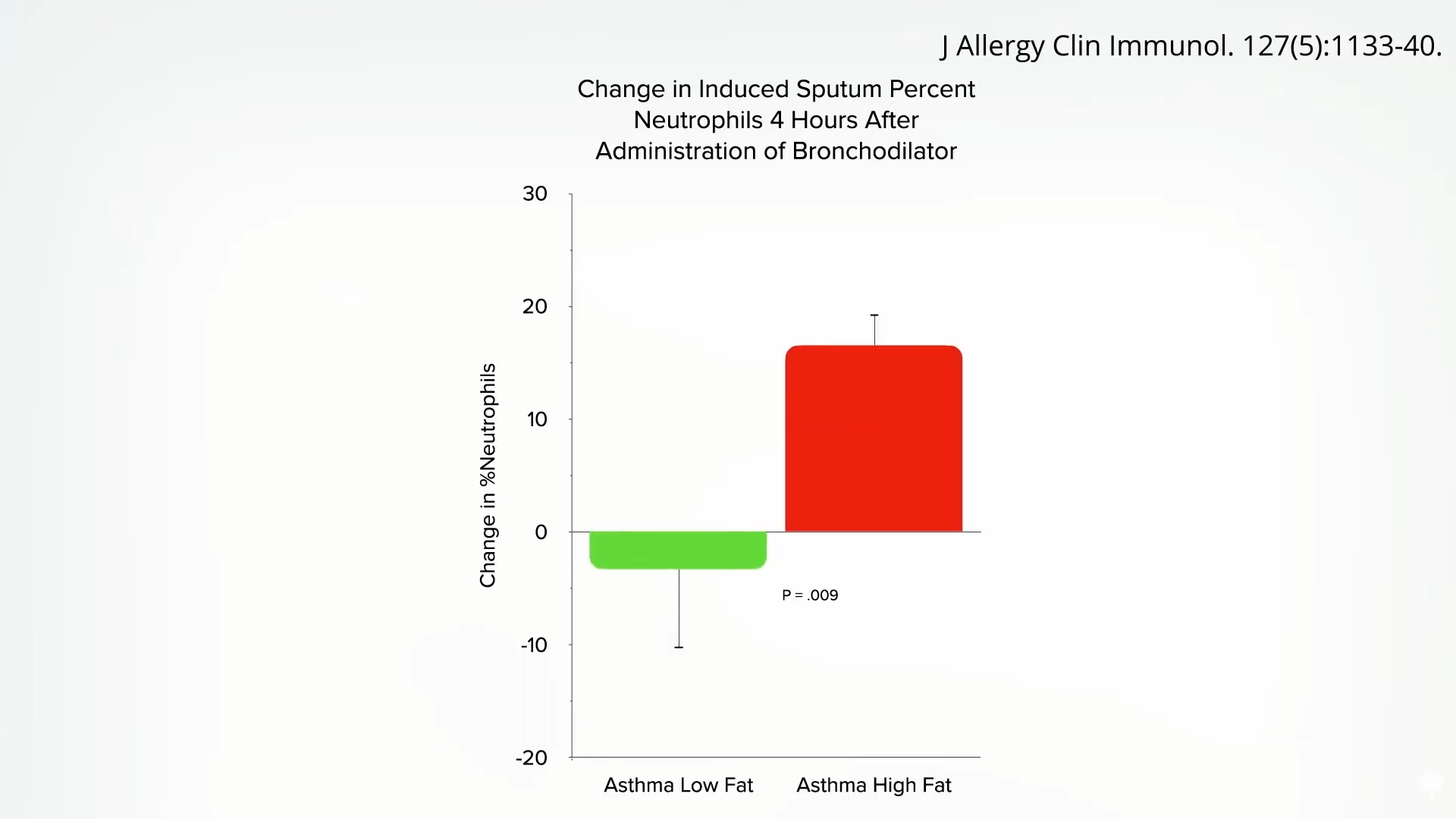
And it doesn’t just inflame the arteries in our heart but our lungs as well. “A high-fat challenge increases airway inflammation and impairs bronchodilator recovery in asthma.” When people with asthma coughed up sputum from their lungs four hours after the same kind of high-fat meal, inflammatory cells shot up in the high-fat meal group, as you can see below and at 2:12 in my video.

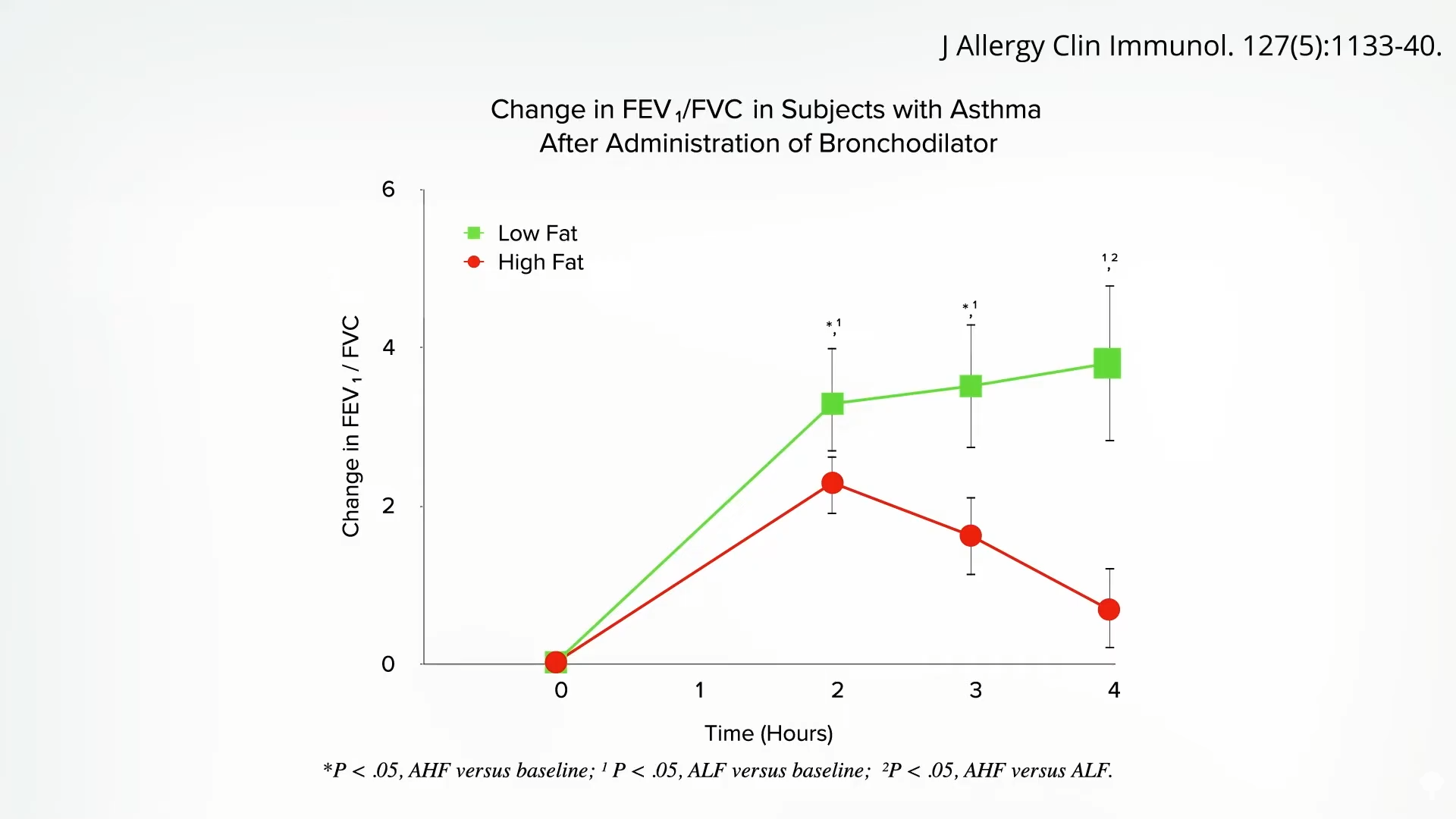
In terms of lung function, when given two hits of their inhalers (containing a drug called albuterol or Ventolin), their airways open up as they should after a low-fat meal. But after the high-fat meal, the same inhaler doses don’t work as well, crapping out after a few hours because of all the extra inflammation in their lungs, as you can see below and at 2:29 in my video.
What you eat can determine how well you breathe.
But those study participants were people with asthma. Well, researchers found that even people without asthma have that same spike in inflammatory cells in sputum coughed out of their lungs four hours after eating what was, in this case, “a Jimmy Dean’s Meat Lover’s breakfast bowl.”
And there aren’t only more inflammatory cells; there is a doubling of the amount of pro-inflammatory oxidized LDL cholesterol sucked up by the type of white blood cells that go on to form foam cells. Those are the cells that build up the inflamed pus in your artery wall that leads to heart attacks. All this happens within just hours of eating pizza, in this case. The fat in your blood goes up, and so do your endotoxin levels, as you can see below and at 3:16 in my video.
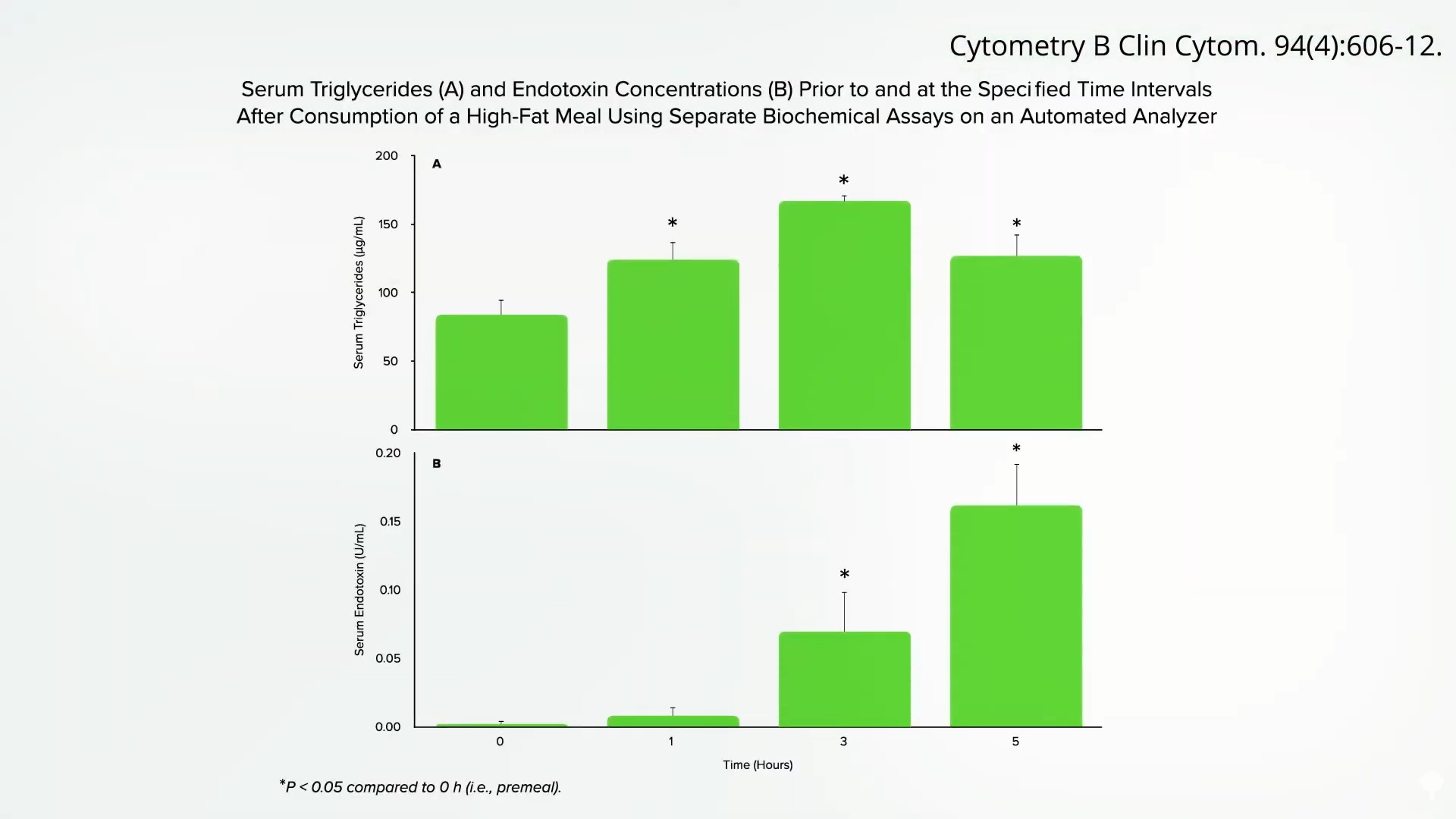
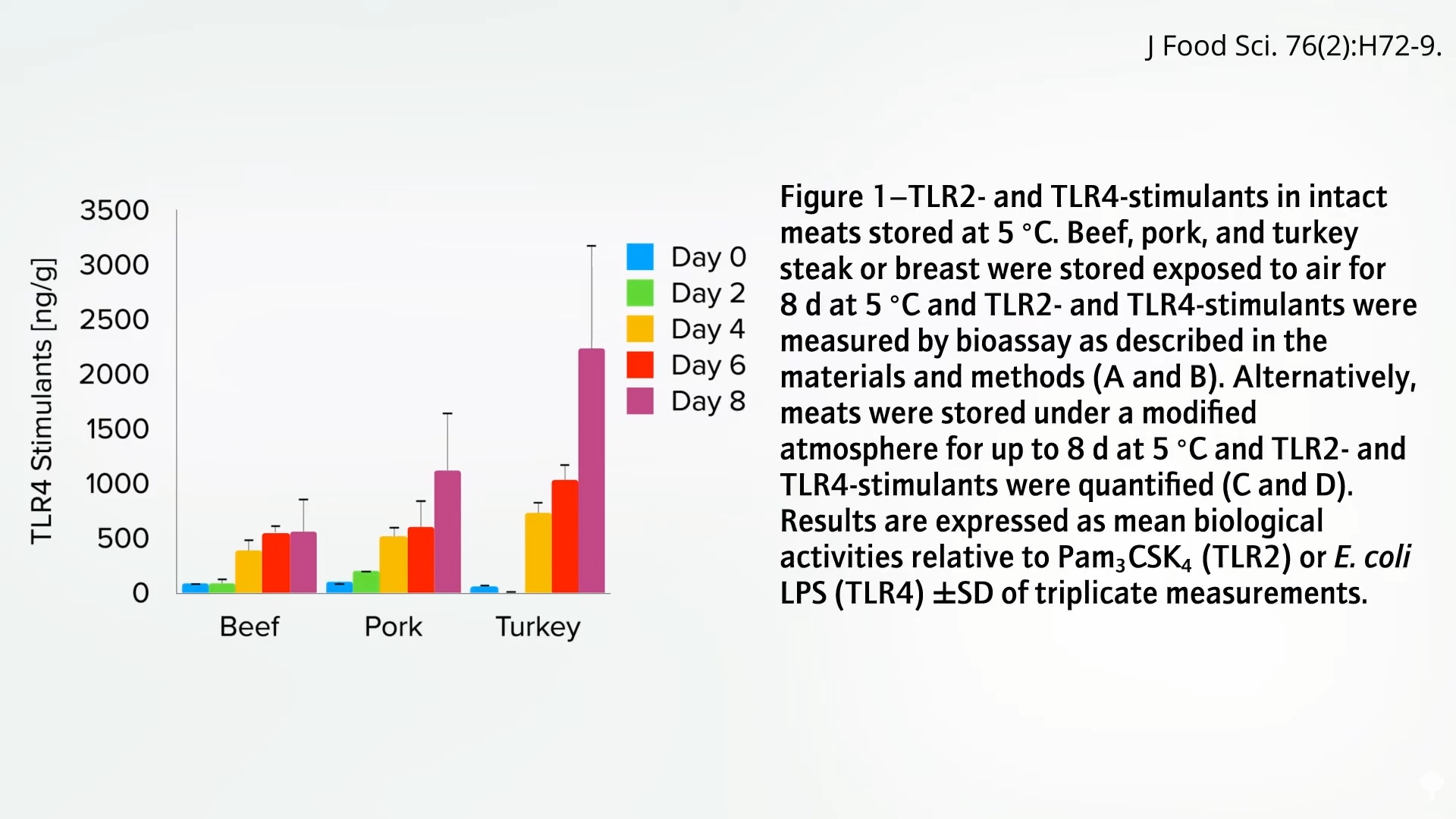
Endotoxins are the components of bacterial cell walls, and foods like meat can be so contaminated with bacteria—alive and dead—that they accumulate endotoxins. We’re talking about both red meat and white meat, as you can see below and at 3:28 in my video.
But recent research (published in 2020) suggests the main culprit may not be endotoxins after all, but the fat itself. The saturated fat floating in your blood after an unhealthy meal may be inducing the inflammation more directly. Either way, we are responsible for what we eat, meal by meal, in shaping the risk factors for chronic metabolic disease.
Doctor’s Note
This topic is the first in a three-part series on saturated fat and fast food. The next two are Exercising to Protect Your Arteries from Fast Food and Foods to Help Protect Your Arteries from Saturated Fat.
What about the “butter is back” studies? See the related posts below.


