






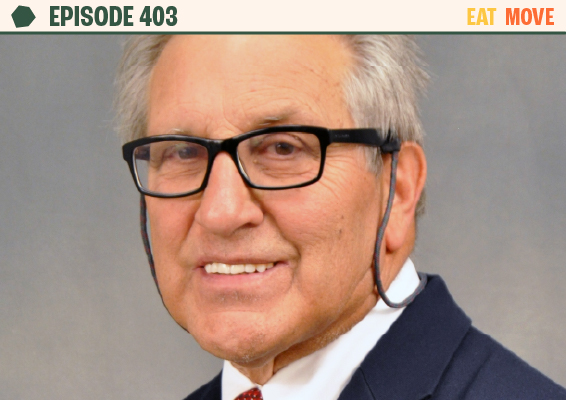

In this episode, I’m joined by Dr Robert Eckel, one of the world’s leading experts on obesity, insulin resistance and cardiometabolic disease. With decades of experience across endocrinology, cardiology and metabolic research, Dr Eckel has played a central role in how obesity is defined, studied and managed at a global level.
We explore why excess body fat is not a single uniform condition, how the Lancet Commission is reframing obesity into preclinical and clinical categories, and why insulin resistance sits at the centre of many, but not all, obesity related health outcomes. This conversation moves beyond BMI to focus on physiology, risk, and what actually matters for long term health.
What We Cover
- Why BMI alone is an incomplete tool for defining obesity
- The difference between preclinical obesity and clinical obesity
- How fat distribution influences metabolic risk more than total fat mass
- Why insulin resistance is largely a consequence of excess body fat
- The role of visceral fat and fatty acid delivery to the liver
- How insulin resistance links to type 2 diabetes, cardiovascular disease and fatty liver
- Why some people with obesity show few metabolic consequences, at least initially
- The idea of a risk gradient and how it informs clinical decision making
- What degree of weight loss tends to improve metabolic health
- GLP-1 therapies, benefits beyond weight loss, and unresolved long term questions
This episode challenges simplified narratives around obesity and metabolism, and offers a clearer framework for understanding risk, prevention and treatment across the lifespan.
- Introduction (00:00)
- Clinical vs Preclinical Obesity: How Should Obesity Be Defined? (05:21)
- Why Is Obesity Difficult to Diagnose and Treat in Practice? (08:06)
- How Genetics and Environment Influence Body Fat Gain (20:27)
- What Is Insulin Resistance and Metabolic Syndrome? (32:23)
- How Insulin Sensitivity Relates to Clinical Obesity (55:26)
- Why Insulin Resistance Begins in Adipose Tissue (59:49)
- Physiological vs Pathological Insulin Resistance Explained (01:04:47)
- How Physical Activity Improves Insulin Sensitivity (01:10:46)
- Family History, Genetics, and Cardiometabolic Risk (01:12:30)
- Individualised Obesity Treatment Guidelines in Clinical Care (01:15:40)
- How GLP-1 Receptor Agonists Are Used in Obesity Management (01:16:12)
- What Is the Obesity Paradox in Cardiometabolic Disease? (01:22:01)
- Future Projections for Obesity and Cardiometabolic Health (01:30:07)
- Public Health Challenges in Preventing Excess Adiposity (01:40:23)
- Practical Clinical Takeaways and Final Thoughts (01:44:15)
Subscribe and stay connected:
Subscribe to The Proof on YouTube, Apple Podcasts or Spotify to ensure you never miss an episode. And don’t forget to follow me on Instagram and X for more insights and updates.
This episode is brought to you by:
38TERA
Consider 38TERA’s DMN prebiotic supplement a daily multivitamin for your gut. Formulated by yours truly and gastroenterologist Dr Will Bulsiewicz. Use code THEPROOF for a discount at checkout.
Eight Sleep
Upgrade your sleep with the Pod 5 Ultra by Eight Sleep. Clinically validated to deliver up to 1 extra hour of quality sleep per night through temperature control and biometric tracking. Use code THEPROOF for $350 off at eightsleep.com/theproof. Try it risk-free for 30 days, with worldwide shipping.
WHOOP
Whoop, the most advanced fitness and health wearable available. Your personalised fitness and health coach to recover faster, sleep better, and train smarter. Claim your first month free on join.whoop.com/simon.
More about Robert Eckel
Robert H. Eckel, MD, is the former Charles A. Boettcher Endowed Chair in Atherosclerosis in the Department of Medicine at University of Colorado Anschutz Medical Campus (UCAMC) in Aurora, CO. Dr Eckel is a distinguished alumnus of the University of Cincinnati College of Medicine in Cincinnati, OH. He performed a Medical Residency at the University of Wisconsin Hospitals in Madison, WI, and a Senior Fellowship in Metabolism and Endocrinology at the University of Washington School of Medicine in Seattle, WA. For nearly 30 years Dr Eckel served as the associate and then program director of the Adult General Clinical Research Center, and subsequently as the interim vice chancellor for research. Dr Eckel is past president of the American Heart Association; American Diabetes Association (Medicine and Science); the Obesity Society, and the Association of Patient Oriented Research. He was a former member of the Extramural Advisory Council of NIDDK, been a contributor to various professional guidelines, and has received numerous awards. Dr Eckel has published over 400 articles/editorials in peer-reviewed journals and his translational research has used populations, human subjects, genetically modified mice, and molecular techniques to pursue physiologic and pathophysiological insights into cardiometabolic disorders such as obesity, metabolic syndrome, diabetes, cardiovascular disease, and more recently neurodegenerative diseases.
