





What would it take for exercise to feel as routine as brushing your teeth, not just for patients in clinics, but for ordinary people going about their daily lives? It’s a question Japan is grappling with urgently. With one of the world’s fastest-aging populations, the country faces growing pressure on its healthcare system and a real need for practical, scalable prevention.
The solution is something EIM Japan has been building towards through community programs, such as group walking initiatives and partnerships with traditional public bathhouses, which embed movement into familiar, everyday settings. Alongside these community efforts, EIM Japan is now turning to digital tools to expand its reach.
Introducing the Body Function Checker System
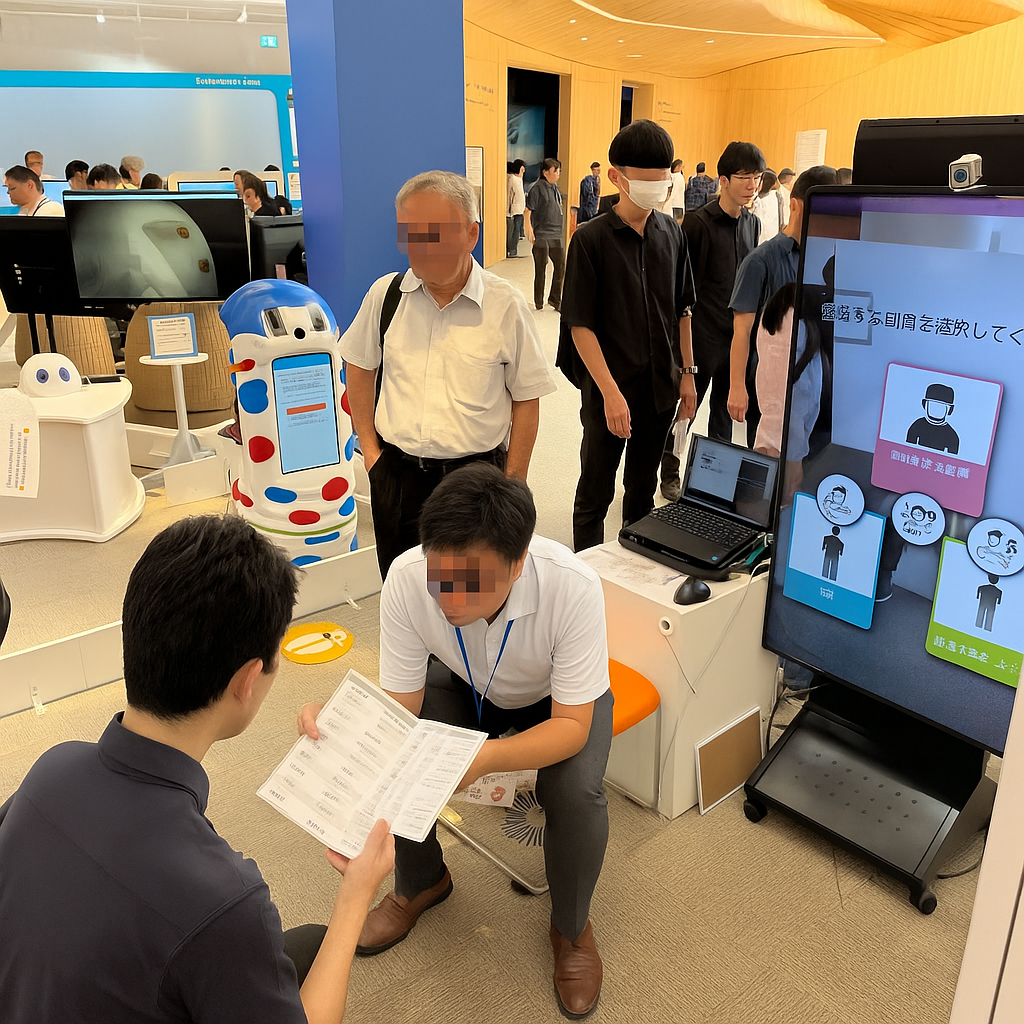
This new philosophy – expanding the reach of EIM Japan through digital tools – first came to life at Expo 2025 Osaka-Kansai, where leaders from EIM Japan conducted public demonstrations that drew over 2,200 visitors. Using camera-based technology, the Body Function Checker assessed participants’ physical and cognitive function in real time as they performed a series of everyday movements, such as standing up from a chair, stepping in place, checking their posture, and completing simple cognitive tasks. The setup was deliberately accessible: no wearables, no specialist equipment, and no appointment was needed.
Within minutes, each person received a personalized profile of their physical and cognitive function, along with practical exercise recommendations they could immediately act upon. What makes the Body Function Checker different from a typical health screening isn’t just the technology – it is the immediacy of the results. Individuals didn’t leave with a referral or a generic brochure – they left with a visual profile of their strength, balance, agility, and cognitive function, as well as specific exercises tailored to their needs. Clear, personalized guidance matters in lowering barriers to preventive care. By turning assessment results into practical exercise recommendations quickly and affordably, prevention becomes more accessible in everyday settings.
The Expo’s theme, “Designing Future Society for Our Lives,” served as an ideal backdrop for the introduction of this new technology. The Body Function Checker provides an initial glimpse into what preventive health could look like when speed, simplicity, and personalization come together. Co-developed with Koga Software Co., Ltd., the Body Function Checker drew interest well beyond the general public. Healthcare providers, municipal governments, and industry representatives all expressed interest – a sign that the appetite for practical, scalable health solutions extends far beyond research circles.
Why This Matters Beyond Japan
Japan’s challenges – an aging population, overstretched healthcare infrastructure, and the need to keep people healthy longer – are hardly unique. Many countries are facing the same pressures, and few have found a clear answer on how to make preventive care both affordable and widely accessible. A major challenge is that preventive care often depends on time-consuming evaluations, self-report or access to specialized services. That is why Japan’s effort to connect everyday settings, healthcare systems and personalized exercise guidance is worth watching. The Body Function Checker provides both individuals and physicians with objective information on physical and cognitive function, offering more than self-report alone.
In the EIM context, this system supports a core challenge: helping physicians assess physical activity and function, recommending exercise with greater confidence, and connecting patients to exercise professionals. By making assessments more objective and easier to share, the Body Function Checker assists physicians in using patient results as a starting point for exercise counseling.
What Comes Next
EIM Japan envisions the Body Function Checker moving into hospitals, community health programs, and workplace wellness initiatives. In hospitals, the Body Function Checker can be used before or during a medical visit to assess physical and cognitive function with minimal additional burden on physicians and health staff. By sharing patient results immediately with the care team and allowing physicians to explain findings with their patients, the Body Function Checker can help patients recognize physical inactivity or changes in function and create a stronger opening for exercise counseling and motivation. In community settings, collected data can serve as a bridge to more specialized medical guidance. Sharing health and biometric information, such as heart rate and step counts from wearable devices, with physicians provides them with more objective information to support timely exercise and dietary guidance.
Looking ahead, systems based on personal health records have the potential to help link physicians and exercise professionals more securely, supporting a more continuous path from assessment to action. Turning assessment into real exercise behavior has always been one of the hardest parts of preventive health. The Body Function Checker offers one practical way to bring Exercise is Medicine closer to everyday care.


