





How do barukas, also known as baru almonds, compare with other nuts?
There is a new nut on the market called baru almonds, branded as “barukas” or baru nuts. Technically, it isn’t a nut but a seed native to the Brazilian Savannah, known as the Cerrado, which is now among the most threatened ecosystems on the planet. Over the last 30 years, much of the Cerrado’s ecosystem has been destroyed by extensive cattle ranching and feed crop production to fatten said cattle. If it were profitable not to cut down the native trees and instead sell baru nuts, for example, that could be good for the ecosystem’s health. But what about our health?
“Although baru nuts are popular and widely consumed, few studies report on their biological properties.” They do have a lot of polyphenol phytonutrients, presumably accounting for their high antioxidant activity. (About 90% of their phytonutrients are present in the peel.) Are they nutritious? Yes, but do they have any special health benefits—beyond treating chubby mice?
Researchers found that individuals fed baru nuts showed lower cholesterol, supposedly indicating the nuts “have great potential for dietary use” in preventing and controlling cholesterol problems. But the individuals were rats, not humans, and the baru nuts were compared to lard. Pretty much everything lowers cholesterol compared to lard. Nevertheless, there haven’t been any reports about the effect of baru nut consumption on human health, until this: A randomized, controlled study of humans found that eating less than an ounce a day for six weeks led to a 9% drop in LDL cholesterol. Twenty grams would be about 15 nuts or a palmful.
Like many other nut studies, even though the research subjects were told to add nuts to their regular diets, there was no weight gain, presumably because nuts are so filling that we inadvertently cut down on other foods throughout the day. How good is a 9.4% drop in LDL? It’s the kind of drop we can get from regular almonds, though macadamias and pistachios may work even better, but those were at much higher doses. It appears that 20 grams of baru nuts work as well as 73 grams of almonds. So, on a per-serving basis or a per-calorie basis, baru nuts really did seem to be special.
There are lower-dose nut studies that show similar or even better results. In this one, for instance, people were given 25 grams of almonds for just four weeks and got about a 6% drop in their LDL cholesterol. In another study, after consuming just 10 grams of almonds a day, or just seven individual almonds a day, study participants got more like a 30% drop in LDL during the same time frame as the baru nuts. Three times better LDL at half the dose with regular almonds, as you can see below and at 2:47 in my video Are Baruka Nuts the Healthiest Nut?.
The biggest reason we are more confident in regular almonds than baru almonds is that studies have been done over and over in more than a dozen randomized controlled trials, whereas in the only other cholesterol trial of baru nuts, researchers found no significant benefit for LDL cholesterol, even at the same 20-gram dose given for even longer—a period of eight weeks.
That’s disappointing, but it isn’t the primary reason I would suggest choosing other nuts instead of baru nuts. I would do so because we can’t get raw baru nuts. They contain certain compounds that must be inactivated by heat before we can eat them. The reason raw nuts are preferable is because of advanced glycation end-products (AGEs), so-called glycotoxins, which are known to contribute to increased oxidative stress and inflammation.
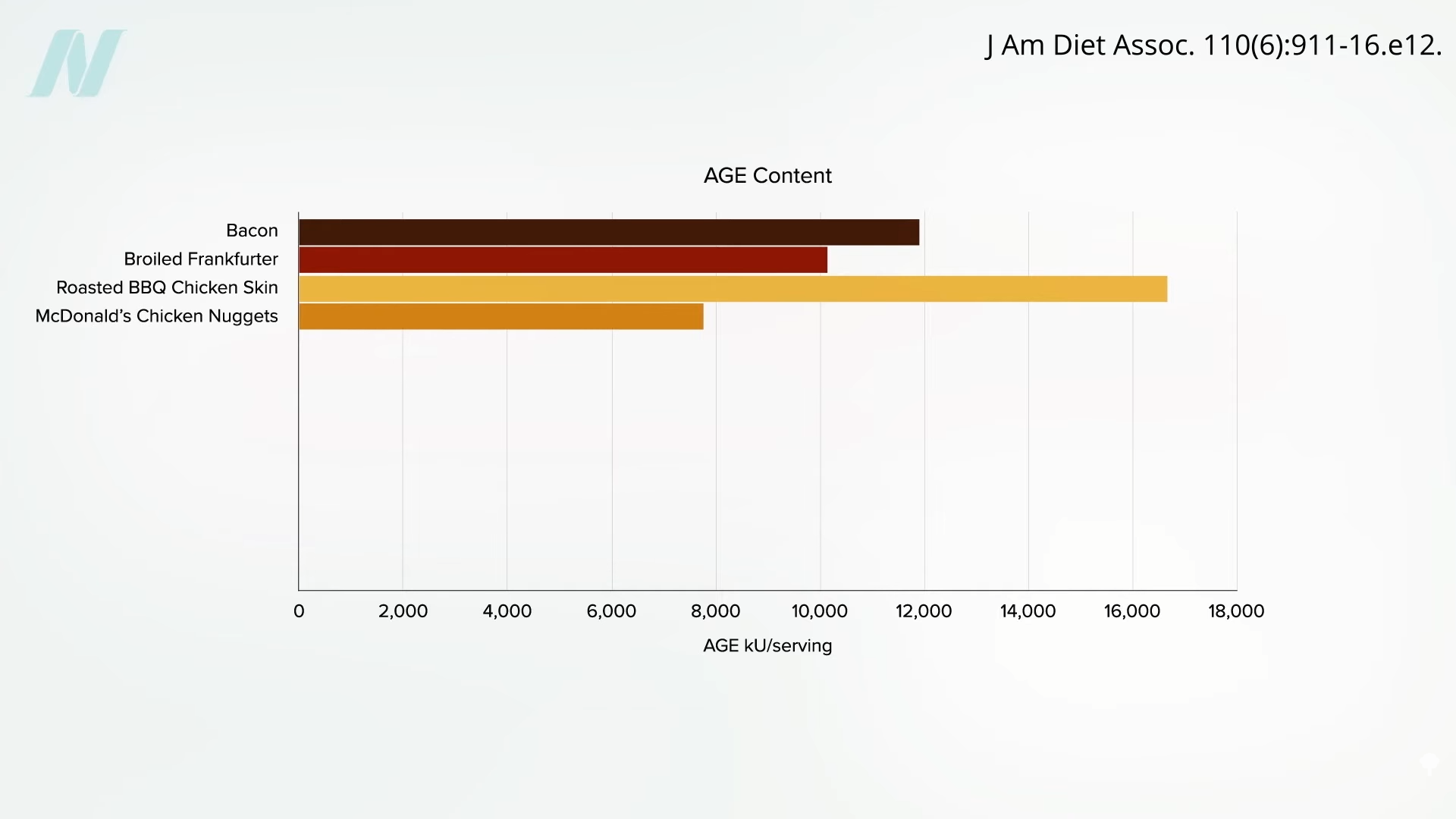
Glycotoxins are naturally present in uncooked animal-derived foods, and dry-heat cooking like grilling can make things worse. The three highest recorded levels have been in bacon, broiled hot dogs, and roasted barbecued chicken skin—nothing even comes close to that, not even Chicken McNuggets, as you can see below and at 3:50 in my video.
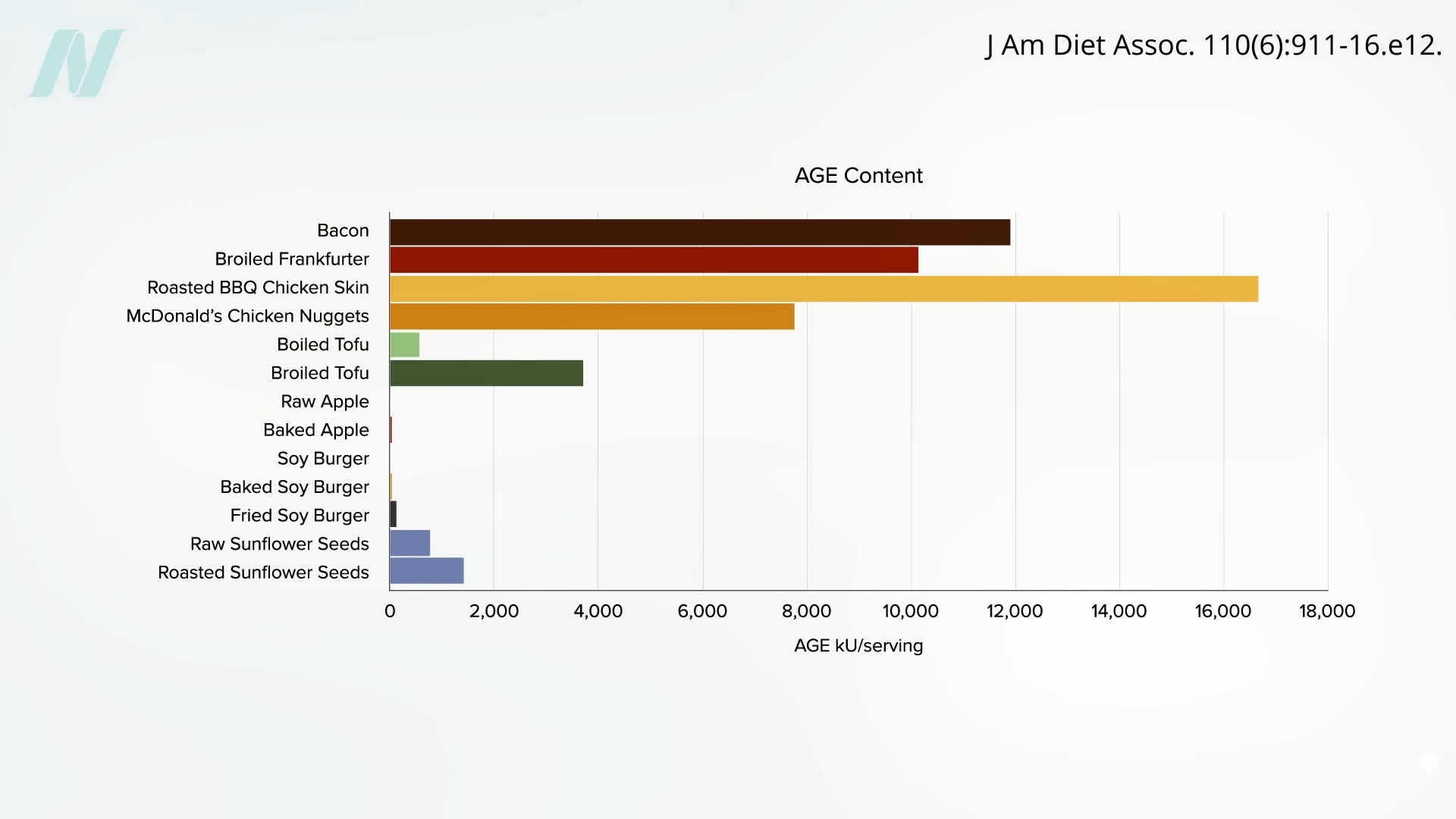
However, any foods high in fat and protein can create AGEs at high enough temperatures. So, although plant foods tend to “contain relatively few AGEs, even after cooking,” there are some high-fat, high-protein plant foods. But, again, AGEs aren’t a problem at all with most plant foods. See the AGE content in boiled tofu (in a soup, for instance), broiled tofu, a raw apple, a baked apple, a veggie burger—I was surprised that veggie burgers are so low in AGEs, even when baked or fried—and nuts and seeds, which are up in tofu territory, especially when roasted, which is why I would recommend raw nuts and seeds and nut and seed butters whenever you have a choice. See below and at 4:33 in my video.
Doctor’s Note
In my Daily Dozen checklist, I recommend eating a quarter cup of nuts or seeds or two tablespoons of nut or seed butter each day. Why? See related posts below.
For those unfamiliar with advanced glycation end-products (AGEs), check out the first two videos I did on them way back when: Glycotoxins and Avoiding Glycotoxins in Food.


