





Elizabeth Bonker is a silent woman with a loud mission. She wants government agencies to cover the costs of training people with autism in a form of communication called assisted spelling. One problem: Leading professional organizations don’t believe it works.
“All nonspeakers above the age of 5 should be given the opportunity,” typed Bonker, who is 28 and cannot talk. Her mother, Virginia Breen, held a wireless keyboard for her. They sat on a hotel patio before an April 27 meeting with a senior aide to Health and Human Services Secretary Robert F. Kennedy Jr.
“We are misunderstood and underestimated,” Bonker typed, occasionally humming or lightly groaning as she considered where to place a slender forefinger on the keyboard.
Assisted spelling is used to help nonverbal people communicate by pointing to letters on boards or using keyboards with physical help from another person.
Supporters say assisted spelling has improved the lives of thousands of people with autism, such as Bonker, and they have powerful allies. Kennedy appointed Bonker and another autistic “speller,” as they call themselves, to a 20-member autism panel made up largely of parents with children whose autism they attribute to vaccinations.
At the reconfigured panel’s first public session on April 28, three other members said their nonspeaking adult children were learning to communicate through spelling. The panel issued a resolution with language from Bonker stating that “robust” communications programs are essential for autistic people. Bonker has urged the Department of Health and Human Services to support training in assisted spelling for those who want it.
But leading professional groups for autism science, as well as those representing psychologists and speech pathologists, point to research showing that these methods — premised on the idea that people with autism have the normal range of cognitive powers but are imprisoned in malfunctioning bodies — are flawed or fraudulent.
Other, validated methods enable nonspeakers to communicate through digital and analog pictures and letter boards. But assisted spelling isn’t autonomous communication, critics say: Consciously or not, the board holder may be influencing or responsible for the typed or pointed-at words — as with a Ouija board.
For many parents in Kennedy’s Make America Healthy Again community, the spelling controversy is angrily ringing the same bells as the notion that vaccines cause autism — which they refuse to consider debunked. As some people see it: Established medicine damaged them with vaccines and now refuses to accept a helpful treatment.
People with autism are “trapped in bodies that have betrayed them because the medical establishment has betrayed them,” said Louis Conte, who has a child with autism, in a September edition of a Kennedy-allied MAHA publication.
By limiting access to spelling, “you are not just limiting expression, you are erasing identity,” said Katie Sweeney, the mother of an autistic adult who is affiliated with an anti-vaccine medical group, at the autism panel meeting.
Mainstream autism experts and advocates in March convened the Independent Autism Coordinating Committee as a counter to Kennedy’s panel. At the new group’s meeting, one member spoke out against the spelling methods.
“In this underfunded disability environment, I don’t want a single penny diverted to debunked interventions like spelling,” said Amy Lutz, a senior lecturer in history at the University of Pennsylvania and an autism support advocate who described her 27-year-old son as “profoundly autistic.”
It’s not only a waste of time, she said later in an interview, but “people subjected to spelling are not given access to evidence-based education. Every interaction turns someone like my son into a puppet, and I find that very objectionable.”
A Patchwork of Perspectives
The universe of autistic people, their parents, researchers, advocates, and service providers is a broad, acrimonious spectrum. Some say that vaccines or chemical exposures caused a massive increase in autism, others that diagnostic changes account for most of the increase. Some seek mainstream or alternative treatments, some demand classroom inclusion, and others want residential treatment. Some people with autism say it’s a difference, not a disability.
“When I tell the parents of a young child they have autism, it’s a tragedy,” said Audrey Brumback, a child neurologist at Dell Medical School at the University of Texas-Austin. “When I give the same diagnosis to a teenager, it’s good news. It means, ‘There’s nothing wrong with you; you’re just autistic.’”
Scientific medicine has failed to deliver good treatments for autism. After four decades of concerted research, “the results have for the most part been very disappointing,” said David Mandell, a professor of psychiatry and pediatrics at the University of Pennsylvania.
Severely autistic children — those requiring round-the-clock care with ailments like epilepsy and generally lacking in verbal language — account for about a quarter of all U.S. autism diagnoses. Caring for them may mean dropping careers and spending vast sums on therapy. “They ought to spell special education with a dollar sign,” said Tracy Simmons, whose 17-year-old son, Noah, has autism.
Many parents of autistic children have tried vitamins and diets that exclude wheat, soy, or dairy. Some have turned to hyperbaric oxygen chambers, others to pig hormones to repair damage spuriously attributed to measles-mumps-rubella vaccines, and infusions of metal-leaching chemicals to remove traces of heavy metals in childhood shots. Recent regimens include camel milk, broccoli extract, and stem cell injections obtained at great expense in Panama and India.
In September, the White House touted leucovorin, used in some cancer care and for an ultra-rare genetic condition. Marty Makary, then-commissioner of the FDA, said the drug could help 50% to 60% of kids with autism.
There’s little evidence behind any of these treatments, Brumback said. Many parents try multiple remedies at once; if a child’s condition improves, it’s hard to tell what worked — or whether the child simply grew out of a problem.
Noah the Speller
During a Zoom session in which he typed on a keyboard held by his mother, Noah Simmons wrote glowingly about the world opened to him by two years of learning to spell and type.
“Im a new person. I have friends, I write, climbing,” he typed. “Conversation. I can have one. I have a say. Im human now.”
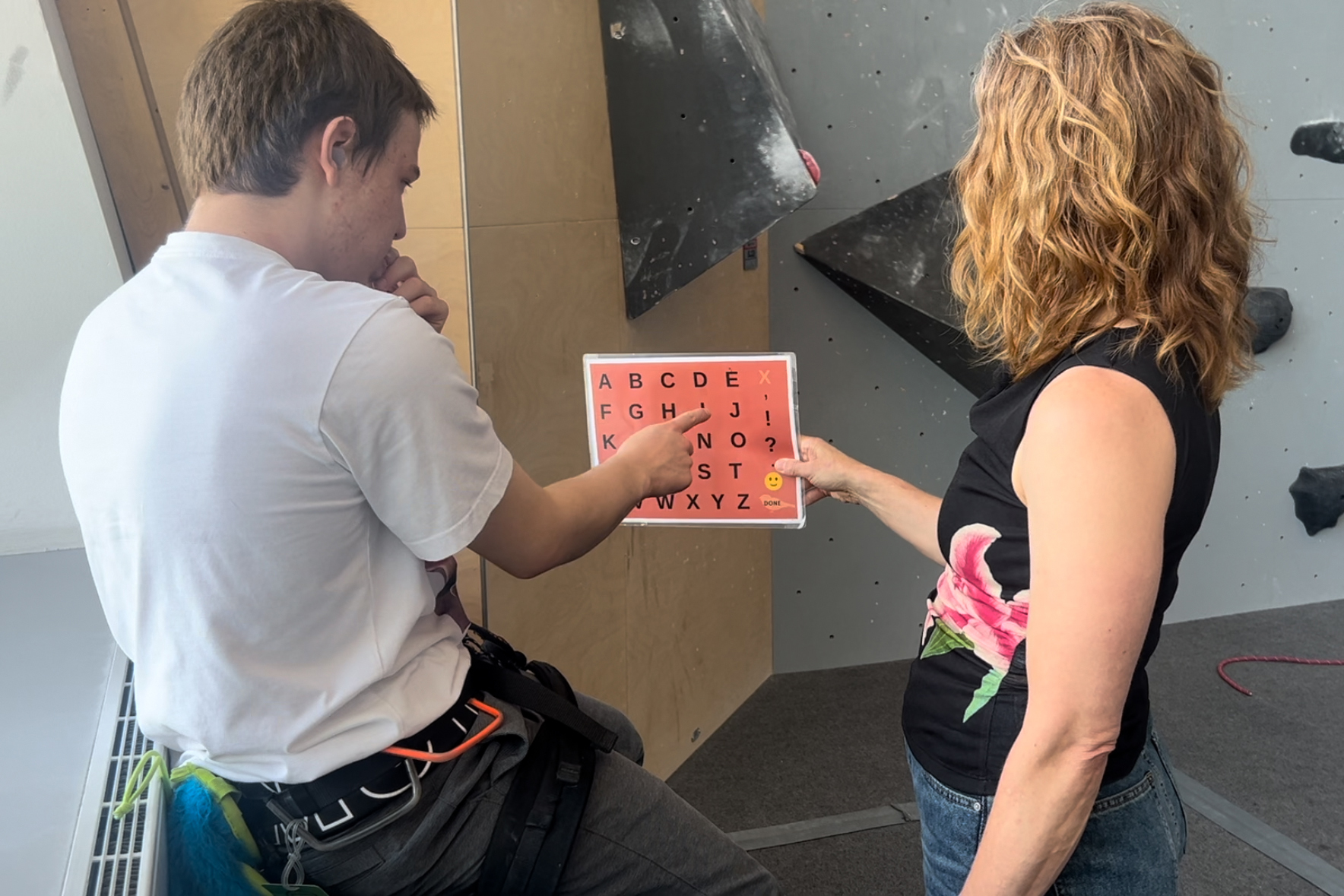
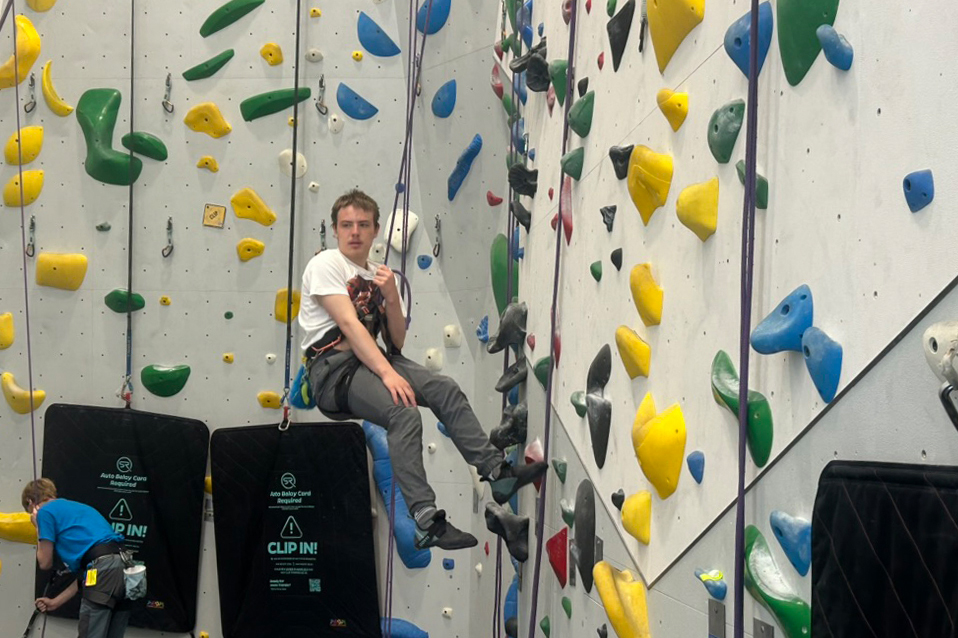
Later, at an indoor climbing center in Gaithersburg, Maryland, Noah scrambled nearly to the top of the wall before he slipped. He glided down the rope and slapped a high five with his climbing instructor as his mother approached. She carried a laminated sheet with the alphabet on it.
Tracy Simmons held the paper while Noah stabbed at the letters one by one, ending with a flourishing swipe at the exclamation mark: “Im going to crush it again!”
There, and at a later keyboard session at home, Noah seemed in control. But when Tracy stopped offering verbal prompts and encouragement, or stopped holding the board, Noah often got lost and signaled a need for help.
Tracy Simmons acknowledges that whoever holds the board could be steering a speller’s words. Despite his climbing prowess, Noah lacks fine motor skills, is anxious, and has trouble controlling his body, she said.
“He’s working on becoming an independent typer. He can do it short amounts of time,” she said. “But at times he gets overwhelmed.”
The method used by Noah and his mother came into use in the United States in the early 1990s. At first, trainers guided the arms or hands of the spellers as they pointed to a letter board. The idea was that the intelligence or literacy of severely autistic people was trapped in bodies they couldn’t control. They needed help physically learning to spell, first with a pencil or finger pointing at stenciled or printed letters, and eventually by typing on a keyboard.
Within a few years, however, dozens of experiments had shown that the facilitators, not the autistic people, were doing the spelling. A review published in 2018 found no evidence that the spellers could identify words or objects without their facilitators.
In addition, the technique has resulted in numerous false sexual abuse charges — sometimes targeting fathers or other people in the autistic person’s life skeptical of the spelling process.
Next came the Rapid Prompting Method, devised by Soma Mukhopadhyay, an Indian mother of a boy with profound autism, who brought her system to the United States in 2001. Elizabeth Vosseller, a speech pathologist in Herndon, Virginia, launched a nearly identical method, Spelling to Communicate. In both, the facilitator, not the speller, holds the letter board. But each method relies on prompts.
Mukhopadhyay and Vosseller, who did not respond to requests for comment, have each declined to submit their systems to the kind of testing that disproved facilitated communication. Bonker said calls for such tests show a lack of respect for the disabled.
Asked why, after 23 years as a speller, she couldn’t communicate alone or without her mother holding the board, Bonker typed, “I can do it in certain environments that don’t include interviews with strangers.” Severely autistic people need coaches to help control their anxiety, Breen said.
Another star of the speller world, Woody Brown, spoke through his mother with Jenna Bush Hager on the Today show on April 1. The Browns were promoting his novel, Upward Bound, which became an immediate New York Times bestseller after its March release. During the segment, Mary Brown spoke in complete sentences that she said came from Woody, but the letters he typed, as far as the program’s viewers could see, did not correspond to her words and often looked like gibberish.
This raised questions about how Woody Brown could be the author of what critics described as a brilliant, sensitive novel. They pointed out that Mary Brown has worked as a Hollywood script analyst. The Browns did not respond to efforts to reach them for comment.
“Spellers” are best known to the public through the success of The Telepathy Tapes, which briefly unseated The Joe Rogan Experience as the country’s most popular podcast early last year. In The Telepathy Tapes’ first season, people with profound autism were allegedly revealed as clairvoyant superhumans.
The evidence for their telepathic abilities was produced through spelling. The host showed spellers and facilitators two things, and the speller, with the facilitator present, typed out what the facilitator saw. Viewers had to wonder whether this was evidence of telepathy or confirmation of what critics have said all along: that the facilitator is the one controlling the words, often by feeding the speller subtle cues.
Bonker said she appreciated the Telepathy Tapes’ host for including her nonprofit group’s information on its website. As for telepathic skills, “I believe nonspeakers have many gifts,” she said. “And I believe what they say.”
The debate over spelling is playing out in boards of education and courtrooms, where parents of autistic children seek aid for their children’s spelling lessons.
In New York state in March, anti-vaccine advocates for spellers showered scorn on state Sen. Patricia Fahy, the Democratic chair of the disabilities committee, after she inserted language into a disability rights bill requiring that payments go to “verified” communication methods that assured patient autonomy.
Vikram Jaswal, a University of Virginia psychologist who works with spellers, said he’s seen people with severe autism who can type independently, though only a handful have that ability out of the couple of hundred spellers he’s met. More research is needed to figure out who can best benefit from the technique, he said.
Tracy Simmons believes in the method, and so does her son — assuming he’s in control of what he types.
On a recent morning, Tracy read aloud a beautiful escape-from-Alcatraz story she said Noah had written with her help and that of his spelling trainer. “He writes all the time in his head,” she said, but it could take years for her son to consistently type independently.
