





SUGAR GROVE, N.C. — Year after year, Ross and Rebecca Tobiassen saw their healthcare costs rise, having relied on the Affordable Care Act for federally subsidized health insurance since its start in 2014. Year after year, the couple in western North Carolina kept their coverage, believing the peace of mind was worth the cost.
But in December, that changed. The Tobiassens decided to cancel their insurance when Rebecca saw the cost of their monthly premiums would jump from $130 to more than $550.
“It makes no sense,” she said. “It’s not worth it anymore.”
The couple own and are the only employees of a small auto shop just west of Appalachian State University in the North Carolina mountains. Rebecca worries about her husband, whose work as a mechanic can be dangerous. A spring once shot a metal ball joint into their garage wall like a gun. A heavy object crushed Ross’ thumb. In 2020, Ross became mostly blind in one eye after repeatedly getting metal shards in it and developing an infection in his cornea.
The Tobiassens are among the Americans who canceled their ACA coverage after Congress allowed enhanced tax credits that helped pay for insurance plans to expire at the end of 2025. The Tobiassens benefited from those tax credits — like millions of other enrollees expected to drop or be dropped from their coverage as the year progresses, unable to keep up with the higher costs.
Established by the Biden administration’s American Rescue Plan Act during the covid pandemic, the expanded subsidies reduced monthly premiums for many families and prompted a tidal wave of new sign-ups, doubling ACA enrollment to about 24 million.
The Centers for Medicare & Medicaid Services is expected to soon release complete data on how many people are no longer covered under the ACA, but an early analysis from KFF, citing Wakely Consulting Group research, showed enrollment could drop from over 22 million at the end of 2025 to as low as 16.5 million in 2026.
In North Carolina, individual ACA sign-ups for 2026 were down 22% compared with the year before, a greater drop than any other state, amounting to a decrease of more than 213,000 people, according to enrollment data. While the Tobiassens’ two teenage daughters remain on Medicaid, Rebecca said the new prices showed that the federal government doesn’t care about families like hers.
“We’ve known that you don’t care about us,” she said, “but you’re making it plain and simple now.”
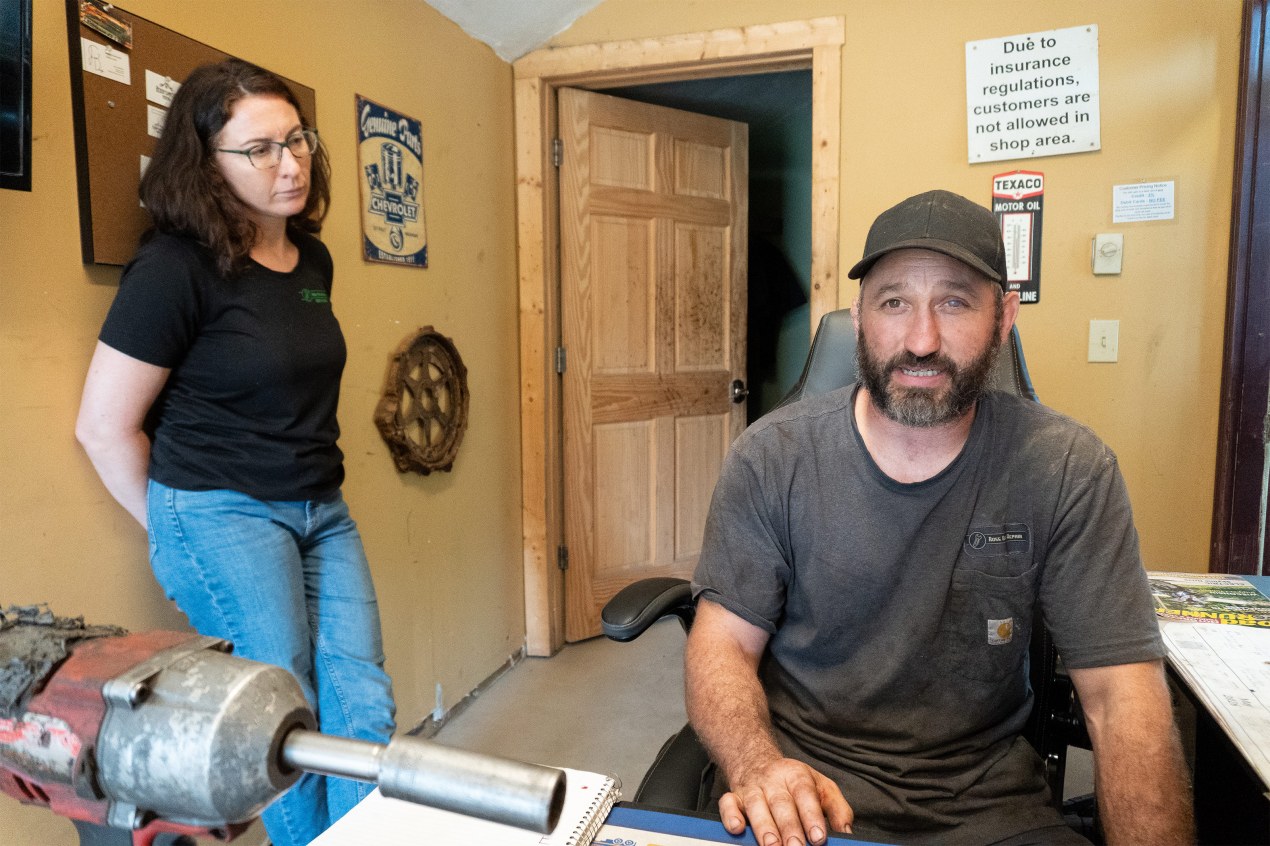
The couple’s insurance hadn’t helped them cover all their medical needs. When the pain from Ross’ eye infection worsened five years ago, Rebecca insisted he go to a specialist, who told them that fixing the eye through cornea replacement surgery would cost them up to $30,000 and require Ross to take six months off.
Ross chose a less expensive treatment to kill nerves in the eye instead.
The couple know they’re taking a risk by not being insured. If something were to happen, they could face an enormous medical bill.
Ross, 47, said the blindness in the one eye doesn’t significantly affect his job. He works long hours, sometimes into the night to keep up with demand.
“I try not to think about it too much,” he said. “I just work.”

Katie Alexander oversees volunteers for Pisgah Legal Services, a western North Carolina nonprofit that helps low-income people secure health insurance. Alexander has helped North Carolina and Tennessee residents try to get ACA marketplace plans since Obamacare’s launch. She said she’s never seen anything like this year.
Nearly 100 Pisgah clients, out of about 700 that Alexander’s team worked with during open enrollment, decided to drop insurance this year, and many others chose cheaper ACA plans with less coverage, Alexander said.
Alexander said the people who have dropped their coverage include Lyft and Uber drivers. They’re trying to start their own businesses. They are artists and people who can work only part-time, because they’re chronically ill. Some are unable to get insurance through their employers, or they make too much to be on Medicaid.
“Even for folks who don’t have chronic illnesses,” Alexander said, “there’s just this nagging at the back of your mind, kind of constantly, of: ‘Don’t get hurt. Don’t get sick. Because you can’t afford that.’”
ACA premiums and deductibles steadily increased for years starting in 2022, then spiked during the enrollment period for 2026 plans, according to data analyzed by KFF. The Tobiassens have seen every dip and rise in plan costs since 2014 when the plans launched. They joined immediately and paid about $30 a month, Rebecca Tobiassen said.
“You actually felt like you were benefiting,” she said.
But through the years as the marketplace became more expensive, the couple made concessions, switching at one point from a silver plan — historically the most popular — to a bronze. The plan mostly provided for the couple’s basic needs.
As they saw their deductibles and premiums rise over more than a decade, Rebecca feared the day would come when they could no longer afford even the cheapest plan.
“Plans are unaffordable, no matter how you cut it,” said Risha Gidwani, a healthcare policy researcher at the University of Colorado Anschutz School of Medicine. “It’s just who is shouldering the unaffordability.”


Gidwani and health economist Cheryl Damberg, in a study published earlier this year, found that most bronze plans, the cheapest ACA options for many, would be unaffordable without subsidies for the average person using the federal healthcare coverage.
Without subsidies, many families using these plans don’t make enough to afford premiums or deductibles, Gidwani’s research shows.
People who drop health insurance also change what’s known as the “risk pool,” Gidwani said, when a group of people share financial hazards.
If healthier people drop out of the risk pool, fewer people subsidize the people who get sick, Gidwani said. That means premiums for the people who get sick will increase again in the future, she added.
“That becomes what we call a death spiral,” Gidwani said.
Even if the subsidies hadn’t expired, taxpayers would have borne an estimated $350 billion burden over the next decade to cover them, Gidwani’s study noted.
After dropping coverage they’d relied on for 11 years, the Tobiassens have no plans to return to the ACA marketplace. They looked into alternative options through a faith-based healthcare organization but decided to go without.
For now, they don’t have a plan B. They’ve set aside some money for a medical emergency. And if their savings run out, Rebecca Tobiassen said, they have a couple of last resorts to lean on: credit cards or family members.
Are you struggling to afford your health insurance? Have you decided to forgo coverage? Click here to contact KFF Health News and share your story.
