





A professional in-home caregiver lost her coverage for Zepbound. She soon realized getting it back was not straightforward.
“I was like: ‘What am I going to do? Hopefully I can just continue keeping this weight off.’”
— Deborah Finley, 50, of Lodi, California
Deborah Finley, 50, of Lodi, California, said her weight started to worry her during the early days of covid. That’s when she noticed a lot of the people who were on ventilators or dying had something in common: obesity.
“It was a scary time,” she said. As a single mom, she was afraid “that I wouldn’t be here for my daughter.”
Finley had been diagnosed with sleep apnea and nonalcoholic fatty liver disease, and she was prediabetic. Her pulmonologist suggested bariatric surgery but couldn’t get Finley’s insurer to cover it.
She exercised and watched what she ate, but she wasn’t losing weight and her mental health suffered.
She remembers telling her doctor: “Look, I’m at 223 pounds. I feel like I’m hitting this wall. I don’t know what else I can do.” That’s when he suggested Zepbound, a GLP-1 drug for obesity.
Finley said she still had to put in a lot of work to get healthy. But the drug helped. Her sleep apnea improved dramatically. She lost weight.
Then her insurance plan stopped covering Zepbound for weight loss at the end of last year. That’s become common because GLP-1 drugs are expensive for health plans and the employers that pay for them.
“They started sending out notices to all the patients,” Finley said. “And they said: ‘Look, we’re pulling this medication. We’re giving you 90 days’ notice to figure out what you want to do.”
From 2025 to 2026, 12 million people were on plans that dropped coverage for Zepbound and 12 million had plans that dropped Wegovy, another GLP-1, according to research by GoodRx, a website that helps patients find discounts on prescription drugs.
If you find yourself in this situation, these tips can help.
1. Read the fine print on coverage.
While many plans don’t cover GLP-1 drugs for weight loss alone, they may make exceptions if you have other conditions.
That was Finley’s situation. She learned that her insurer would cover Zepbound if it was used to treat obstructive sleep apnea, or MASH, a fatty liver disease. GLP-1s are also covered for people with Type 2 diabetes.
You can work with your doctors to screen for qualifying conditions, said Caleb Alexander, a professor of epidemiology and medicine at the Johns Hopkins Bloomberg School of Public Health.
Undiagnosed diabetes, he said, is “the most likely scenario that would allow for someone to go from not being qualified to being qualified.”
Since Finley had sleep apnea and testing showing that the drug helped, she learned it could still be covered with a prior authorization — that’s when you have to get approval from your health insurance before it will cover a medical cost.
Finley said her physician told her a prior authorization was on file, but when she tried to refill her prescription, the pharmacist told her Zepbound was denied.
2. File an appeal — and get some help from your doctor.
Don’t give up if your medication is denied, said Catherine Varney, the obesity medicine director for UVA Health, the health system affiliated with the University of Virginia in Charlottesville. Sometimes your insurer will relent on appeal, if you make a good case.
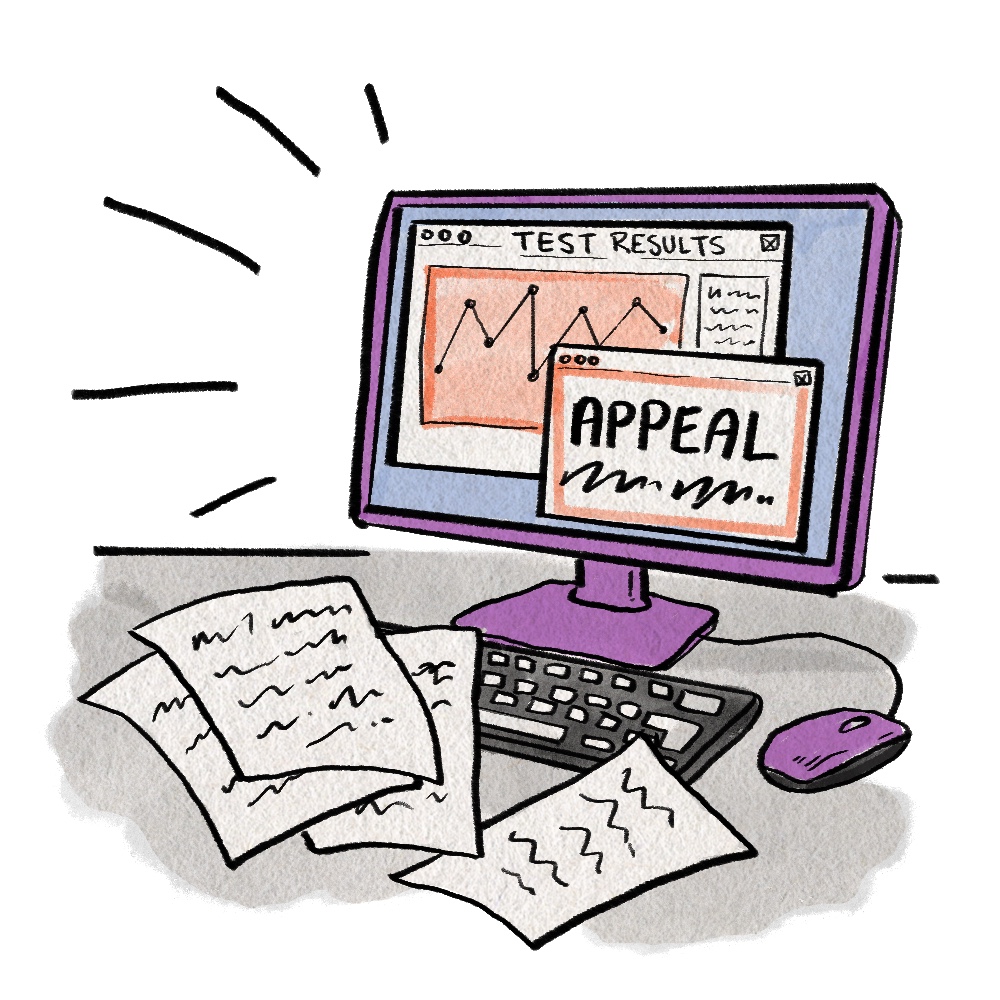
Finley made several frustrating phone calls and eventually went digging through her online medical records.
“I had to do my own investigative work,” she said.
Those records showed that Zepbound was indeed denied. Her doctor had applied for prior authorization, but it did not go through, because her insurer said there was not sufficient data to back up the request. Somehow, her health information, including the sleep apnea testing results, hadn’t made it to the right people.
Finley eventually got her hands on the 17-page report and got a little help from ChatGPT to write an appeal, showing that the drug was necessary for her based on her diagnosis and covered under her policy.
This kind of appeal can be a lot of work. Luckily, many doctors’ offices will help and know how the system works, Alexander said.
“I don’t think that patients should be expected to navigate these waters on their own,” he said.

3. Carefully document your care.
Sometimes you may have to file multiple appeals if the first one is unsuccessful, said Tracy Zvenyach, the vice president for advocacy and research at the nonprofit Obesity Action Coalition, which receives financial support from drugmakers including Zepbound maker Eli Lilly and Wegovy producer Novo Nordisk.
Zvenyach also recommends keeping meticulous records. Some plans require something called step therapy, meaning patients have to try and fail on other drugs or treatments before getting covered for the one their doctor wants them to take.
“Keep a history of other meds you’ve taken so you can provide documentation for step therapy requirements,” she said. “Document dates of participation in any nutrition and physical activity program or membership.”
Finley filed an appeal on Feb. 4, and although she expected a hearing within 90 days, it hadn’t been scheduled yet as of mid-June.
She said it’s been stressful because she hasn’t been able to get new injections of Zepbound since mid-January.
4. Look for discounts if you pay out-of-pocket.
The drugmakers that make Zepbound and Wegovy sell the medicines at a discount to people who pay out-of-pocket instead of using insurance. (Try discount sites like TrumpRx or GoodRx.)
Even with discounts, the drugs are not affordable for everyone. If you have a health savings account or a flexible spending account, you can use it to pay for them with pretax dollars.
5. If you’re considering compounded GLP-1s online, watch for red flags.
You might have seen ads for affordable off-brand obesity drugs prescribed by online providers. These are compounded products — that is, made by specialized pharmacists instead of a drug company.
Compounded medicines are prepared using the same active ingredient as the brand-name drugs. But they aren’t approved by the Food and Drug Administration.
Look out for quality and safety issues. Check the National Association of Boards of Pharmacy’s online pharmacy verification tool. Make sure the pharmacy preparing your drug is licensed in your state. If it’s not, it may not be undergoing inspections or complying with other laws.
After stretching out her remaining supply of Zepbound as long as she could, Finley is taking a compounded version of the drug while she continues the insurance appeals process.
6. Be persistent. And remember to breathe.
Being told no by an insurer is maddening. But Alexander said you often have other options.
“If any appeal that we make is unsuccessful, there are other treatments that we can use,” he said — for example drugs like Contrave, or a cheaper combination of generic naltrexone and bupropion.
UVA Health’s Varney, who has consulted for Eli Lilly, said not to give up on trying to get GLP-1s covered. “Take a breath, but go right back to it,” she said, adding that GLP-1s are superior to the older drugs on the market.
Alexander said he thinks obesity drugs will eventually become affordable — cheap even. Statins, which are used to treat high cholesterol, were once expensive and hard to get covered. Now, Alexander notes, they’re generic and often cost just a few bucks.
“I know it’s hard to imagine,” he said. “But there will come a day when we no longer see these access barriers for GLP-1s.”
Healthcare Helpline helps you navigate the health system hurdles between you and good care. Send us your tricky question and we may tap a policy sleuth to puzzle it out. Share your story. The crowdsourced project is a joint production of NPR and KFF Health News.