





Which legumes are best at inhibiting the matrix metalloproteinase enzymes that allow cancer to become invasive?
Although we’re spending billions of dollars on fancy new types of chemotherapy, the overflowing sink that is cancer treatment is expected to rise by about 70% over the next two decades because drugs are being used to merely mop up the mess rather than turn off the faucet. You can’t really give drugs to people to prevent cancer because of the side effects and cost, but there is said to be “overwhelming…evidence that the dietary bioactive compounds found in whole plant-based foods have significant anticancer and chemopreventive (cancer-preventing) properties.”
I’ve previously talked about the impact of diet and nutrition on the 10 hallmarks of cancer. The bottom line is that evidence points to a diet that includes minimal animal products and, perhaps more importantly, maximal plant foods. Some foods that seem to be especially beneficial include fruits (especially berries), vegetables (especially greens), legumes (beans, split peas, chickpeas, and lentils), nuts and seeds (especially flaxseeds), onions, garlic, mushrooms, herbs and spices (for example, turmeric), and, as a beverage, green tea.
Chemotherapy may not even be particularly good at mopping up the mess. “Cancer drugs often impair quality of life and fail to extend patient survival.” Let me say that another way: You’re paying for drugs—maybe selling your house to pay for drugs—that may just be making your life worse for no benefit. Some have suggested we demand at least three months of extended life from pharmaceuticals, but if we demand that chemo actually works, would companies give up testing new cancer drugs altogether? On the other hand, by requiring clinically important benefits—what a concept—maybe Big Pharma would reallocate resources toward targeting the more critical cancer processes like metastatic spread, since it’s the tumor metastasis that accounts for 90% of cancer-related deaths. Who cares if some drug shrinks your primary tumor if it’s spreading and cutting your life just as short?
What about controlling metastatic cancer with some of those natural bioactive compounds in plants? Evidently, “it has been proven that (plant) phytochemicals are able to inhibit nearly every step of the invasion-metastasis cascade,” at least in vitro (in a petri dish). Below is a list of some purported dietary sources of antimetastatic phytochemicals, which you can also see at 2:27 in my video Blocking the Cancer Metastasis Enzyme MMP-9 with Beans and Chickpeas.
All of these foods are shown to block all sorts of cancer-signaling pathways, but let me focus on one: matrix metalloproteinases (MMPs). Since about 90% of cancer disability and death is due to cancer spreading (metastasis), let’s talk about MMPs, which “actively participate in the whole metastatic journey.” Matrix metalloproteinases are enzymes that allow the cancer to tunnel through the surrounding flesh and invade the lymph or blood vessels, and then enable it to burrow in and grow somewhere else.
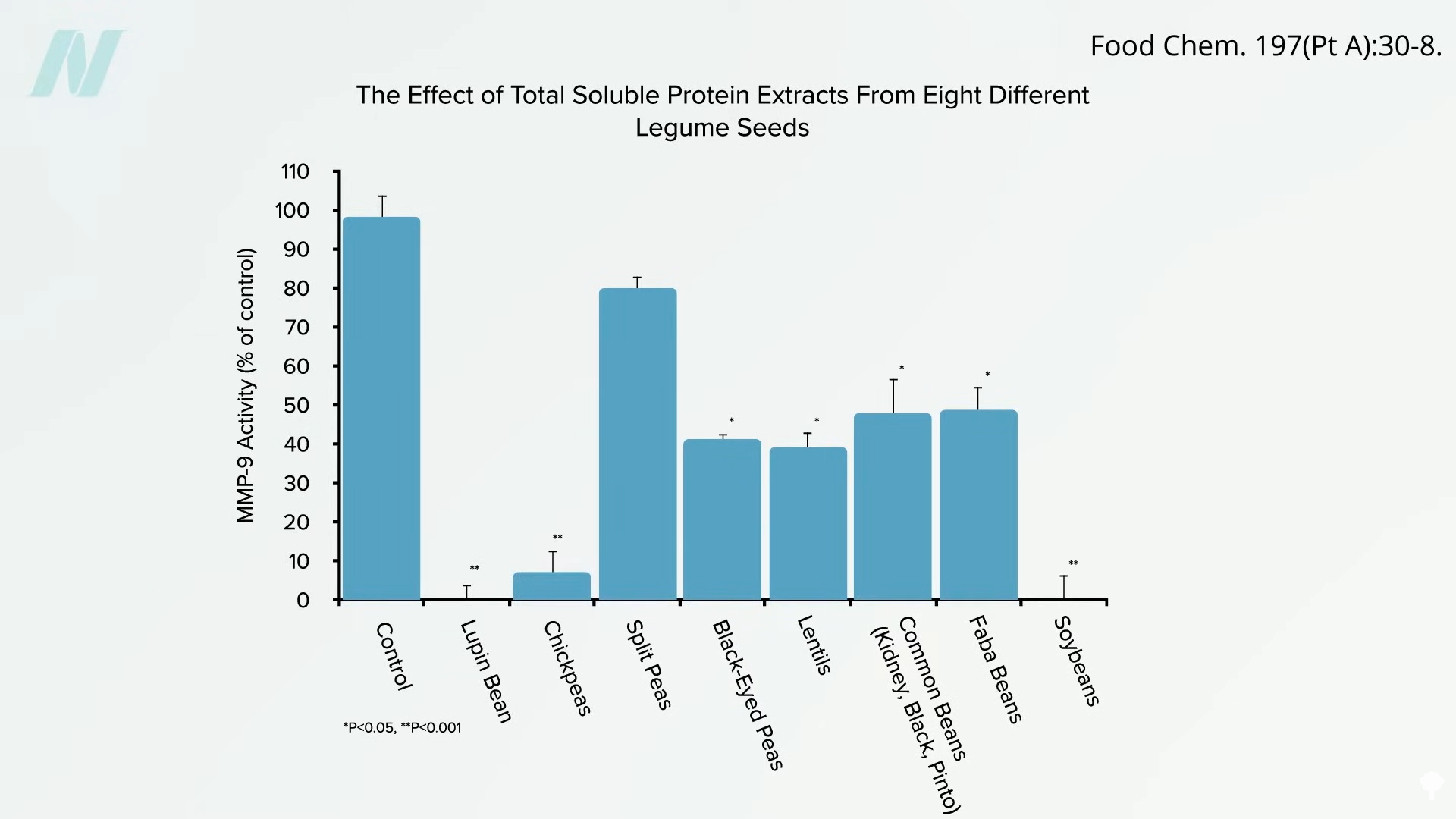
So, Big Pharma developed matrix metalloproteinase inhibitor drugs, which worked great in animal models but caused severe side effects in humans. So, what about using food? There are special proteins in legumes (beans, split peas, chickpeas, and lentils) that reduce MMP activity. But which is the leading legume? Researchers tested eight different kinds: lupin beans, chickpeas, split peas, black-eyed peas, lentils, more common beans (like kidney, black, or pinto), fava beans, and soybeans. Which do you think worked best?
Without any beans, the matrix metalloproteinase activity churned away at around 100%, and dripping on some protein from split peas didn’t seem to help much, but the black-eyed peas, lentils, common beans, and fava beans cut enzyme activity by more than 50%. Guess what slashed activity by more than 90%? Lupin beans, chickpeas, and soybeans, as you can see below and at 4:08 in my video.
But does this translate into slowing down the cancer’s spread?
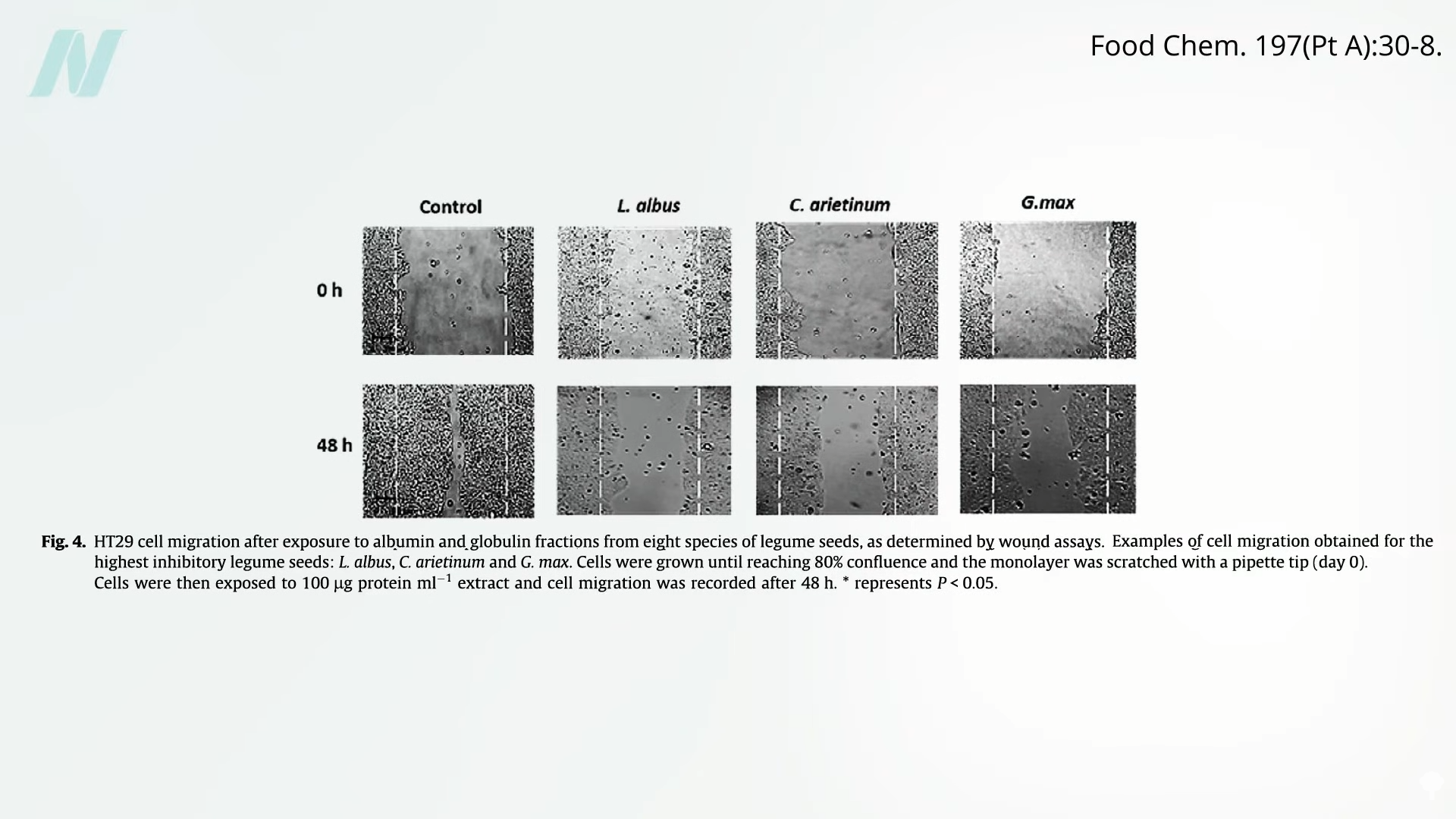
Researchers plated a layer of human colon cancer cells in a petri dish and then took a razor blade to clear a strip down the middle. Within 48 hours, the cancer quickly converged to fill the gap. But when a little protein from lupin beans, chickpeas, or soybeans was dripped on, it looked like the cancer cells struggled to close the distance, as you can see below and at 4:33 in my video.
Okay, but they used raw beans. You don’t know if these anti-cancer proteins are destroyed by cooking until you put it to the test. Researchers found that the matrix metalloproteinase inhibitors in soybeans, at least, did remain active after cooking.
So, maybe it’s no wonder that eating legumes reduces the risk of colorectal cancer. Yes, but colon cancer, which sprouts from the inner lining of the colon, could potentially come in contact with some of these bean proteins. Presumably, they wouldn’t get into the bloodstream.
Those eating a vegetarian diet do seem to have significantly lower levels of matrix metalloproteinases, but this is just thought to be due to their lower levels of inflammation, similar to the way non-smokers also have lower MMP levels. This is good because this enzyme isn’t just a cancer biomarker, but also may be involved in autoimmune diseases and cardiovascular disease. The machete-type nature of this enzyme can hack through the inflamed, cholesterol-filled atherosclerotic lesions lining diseased arteries and cause the plaque to rupture. People know that those eating a more plant-based diet tend to have less heart disease, but may not realize they harbor significantly less cancer risk, too, particularly among those eating strictly plant-based diets.
Doctor’s Note
The video I mentioned is Fighting the Ten Hallmarks of Cancer with Diet.
For other videos on cancer metastasis, check the related posts.


